



What's Happening?
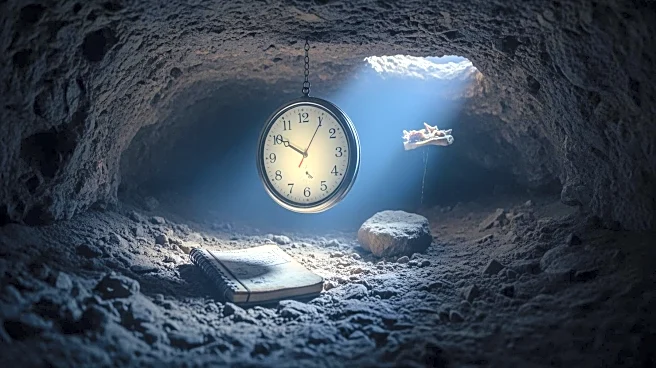
In 1962, Michel Siffre, a young scientist, conducted a groundbreaking experiment by isolating himself in a cave in the French Alps for 63 days without any time cues. This experiment, conducted in total darkness and isolation, revealed significant insights
into human circadian rhythms. Siffre's findings demonstrated that humans possess an internal biological clock that can operate independently of external environmental cues. His work has since influenced various fields, including space exploration, military protocols, and medical science. Siffre's data continues to be referenced by institutions like NASA and the European Space Agency (ESA) for designing long-duration confinement studies and spaceflight protocols.
Why It's Important?
Siffre's experiment has had a lasting impact on multiple sectors. In space exploration, understanding human circadian rhythms is crucial for designing missions that involve long periods of isolation and confinement, such as those to Mars. The military has also applied his findings to improve scheduling for personnel in environments lacking natural light, such as submarines. In medicine, Siffre's work laid the foundation for chronotherapeutics, which explores how the timing of treatments can affect their efficacy. This research is particularly relevant for conditions like cognitive impairment and mood disorders, where circadian disruption plays a role.
What's Next?
The implications of Siffre's research continue to unfold. Space agencies are incorporating his findings into mission planning, focusing on light exposure and activity scheduling to mitigate circadian desynchronization. In the medical field, ongoing research is exploring how aligning treatments with the body's internal clock can enhance outcomes. Despite the advancements, there are still no internationally harmonized guidelines for managing biological time alignment in high-risk occupations, indicating a need for further research and standardization.
Beyond the Headlines
Siffre's experiment highlights the ethical considerations of conducting research in extreme conditions. Modern studies must balance the need for scientific discovery with the well-being of participants. Additionally, his work underscores the importance of interdisciplinary collaboration, as insights from chronobiology are applied across diverse fields such as space exploration, military operations, and healthcare. The long-term impact of Siffre's findings continues to shape how humans adapt to and manage time in isolated and extreme environments.