






What's Happening?
Lightbridge Corporation has secured a slot within the Idaho National Laboratory's (INL) Advanced Test Reactor (ATR) to irradiate its advanced nuclear fuel, Lightbridge Fuel TM. This development is a crucial step in the company's efforts to develop next-generation
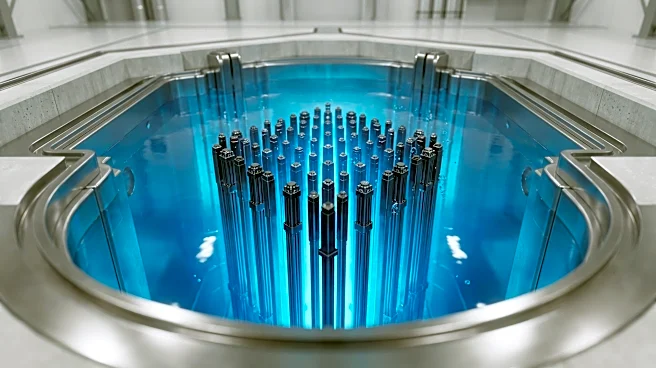
nuclear fuel technology for existing light-water and pressurized heavy-water reactors, as well as for new small modular reactors. The agreement, Project Task Statement (PTS) No. 2 under a Cooperative Research and Development Agreement (CRADA) with Battelle Energy Alliance, LLC (BEA), the U.S. Department of Energy’s operating contractor for INL, allows for loop testing of clad Lightbridge Fuel TM rodlets. Loop testing involves irradiating fuel within a self-contained and independently controlled environment that simulates the coolant chemistry, temperature, pressure, and flow conditions of a commercial light-water reactor. This process is considered the next phase from materials research towards fuel qualification. The work builds upon previous technical milestones, including fuel fabrication process development and irradiation testing, and is expected to span an estimated 60 months.
Why It's Important?
This initiative is significant for the U.S. nuclear energy sector, as it aims to enhance reactor safety, economics, and proliferation resistance while delivering abundant, zero-emission, clean energy. The development of advanced nuclear fuel technology, such as Lightbridge Fuel TM, is critical for the nation's energy security and its goal of achieving a zero-carbon electric grid. By improving the performance and safety of nuclear reactors, this technology could extend the operational life of existing plants and make new nuclear builds more economically viable. The collaboration with INL, the nation's lead nuclear research and development laboratory, underscores the strategic importance of this project. Successful qualification of Lightbridge Fuel TM could position the U.S. at the forefront of nuclear fuel innovation, potentially reducing reliance on foreign fuel sources and strengthening the domestic nuclear industry. This advancement could also support the integration of nuclear energy with renewable sources by enabling load-following capabilities in small modular reactors.
What's Next?
Over the next estimated 60 months, Lightbridge will proceed with the irradiation of fuel rodlets fabricated from enriched uranium-zirconium alloy with cladding, in both cylindrical and multi-lobe geometry, within INL's ATR. This will involve experiment design, provision of materials, assembly, irradiation, and subsequent disposition of materials. The successful completion of this loop testing phase is expected to move Lightbridge Fuel TM closer to commercial deployment in existing light-water reactors and new small modular reactors. Further technical milestones and regulatory approvals will be required following the irradiation testing. The company will likely continue to collaborate with Battelle Energy Alliance and the U.S. Department of Energy to advance the qualification process. The outcomes of this testing will be closely watched by the nuclear energy industry, as they could pave the way for broader adoption of this advanced fuel technology and influence future nuclear energy policies and investments in the United States.
Beyond the Headlines
The development of advanced nuclear fuels like Lightbridge Fuel TM carries profound implications beyond immediate energy production. Ethically, it addresses the imperative for cleaner energy sources to combat climate change, offering a path to reduce carbon emissions without the intermittency issues of some renewables. Legally, the enhanced proliferation resistance of such fuels could strengthen international non-proliferation regimes, as the design aims to make the diversion of nuclear materials for weapons purposes more difficult. Culturally, a successful deployment could shift public perception of nuclear energy, fostering greater acceptance by demonstrating improved safety and efficiency. Long-term, this technology could trigger a renaissance in the U.S. nuclear industry, creating high-tech jobs and re-establishing American leadership in nuclear innovation. It also highlights a broader shift towards smaller, more flexible reactor designs that can integrate more seamlessly into modern energy grids, potentially decentralizing power generation and increasing energy resilience across the nation.