





What's Happening?
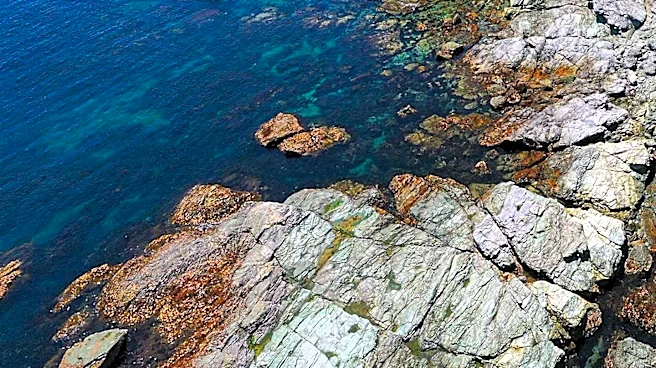
The National Oceanic and Atmospheric Administration (NOAA) has released its latest 'State of the Ecosystem' report, indicating that while the Gulf of Maine has experienced a temporary slowdown in warming, the ecosystem remains unstable. The report, presented
to the New England Fishery Management Council, highlights that Maine's fishing ports are currently thriving, driven by high lobster prices. However, the report warns of long-term warming trends due to greenhouse gas emissions. The Gulf of Maine, historically warming faster than 99% of the ocean, has seen a slight reprieve in recent years, but scientists predict temperatures will rise again. The report underscores the need for diversification in fisheries to adapt to these changes, as species distribution is affected by temperature shifts.
Why It's Important?
The findings of the NOAA report are significant for the fishing industry and coastal communities in New England. The Gulf of Maine's instability poses risks to the region's economic reliance on fisheries, particularly lobster and scallop, which are vulnerable to climate change. The report suggests that without diversification, the industry may face challenges as species migrate and populations fluctuate. This instability could impact local economies, employment, and cultural practices tied to fishing. The report also highlights the broader implications of climate change on marine ecosystems, emphasizing the need for adaptive management strategies to sustain fisheries and protect biodiversity.
What's Next?
The report calls for increased efforts to diversify Maine's commercial fisheries to enhance resilience against climate change. This could involve adapting fishing gear, exploring new fisheries for species migrating north, and expanding aquaculture practices. Additionally, NOAA's reduced data collection under current federal priorities presents challenges in understanding ecosystem changes. To address this, NOAA is encouraging public contributions to supplement scientific data. The ongoing adaptation and management of fisheries will be crucial in navigating the uncertain future of the Gulf of Maine's ecosystem.