


What's Happening?
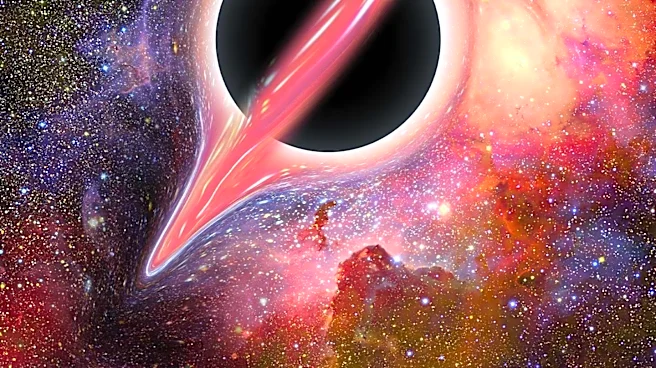
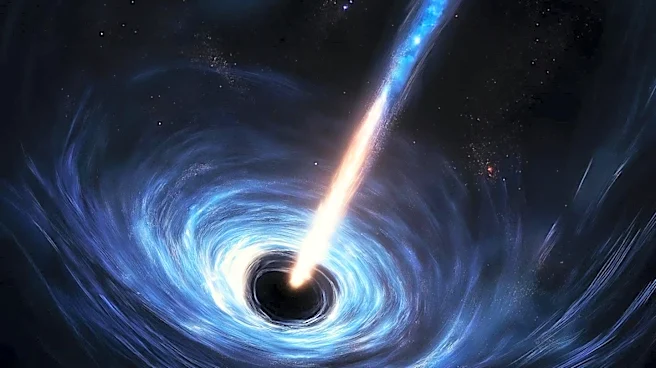
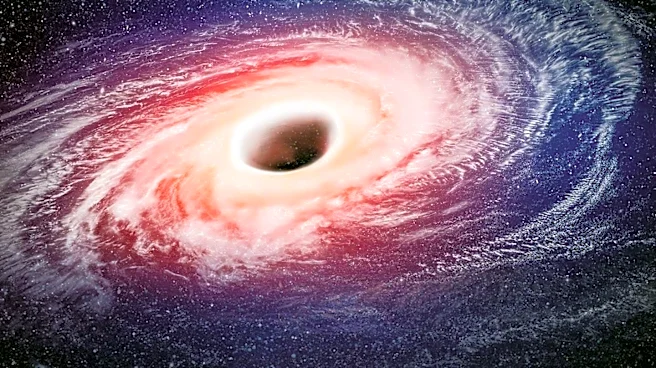
Astronomers have observed a star being torn apart by a black hole located approximately 30,000 light-years from its galaxy's core. This event, known as a tidal disruption event (TDE), was discovered by a team led by Robert Stein from the University of
Maryland and NASA's Goddard Space Flight Center. The black hole's location is unusual, as such events typically occur near galactic centers. The discovery raises questions about whether the black hole was ejected from the galaxy's core or is the remnant of a swallowed dwarf galaxy.
Why It's Important?
This discovery challenges existing theories about the locations and behaviors of black holes. Understanding the dynamics of such events can provide insights into galaxy formation and evolution. The findings could also influence future astronomical surveys and the search for similar phenomena, potentially leading to a better understanding of the universe's structure and the role of black holes in shaping it.
What's Next?
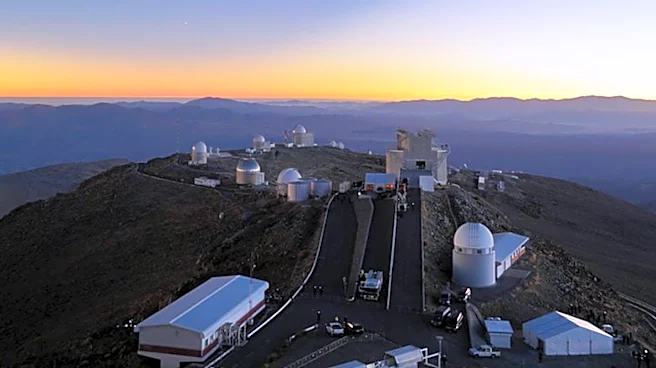
Astronomers plan to conduct further observations to determine the black hole's origin. A deep image of the area, once the flare fades, will help ascertain whether the black hole is part of a small galaxy being disassembled or if it was ejected from a larger one. The Vera C. Rubin Observatory's upcoming surveys are expected to identify more such events, contributing to a broader understanding of black hole distribution and behavior.