

What's Happening?
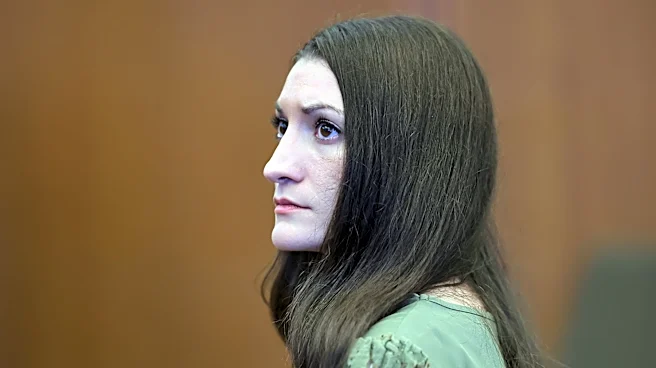
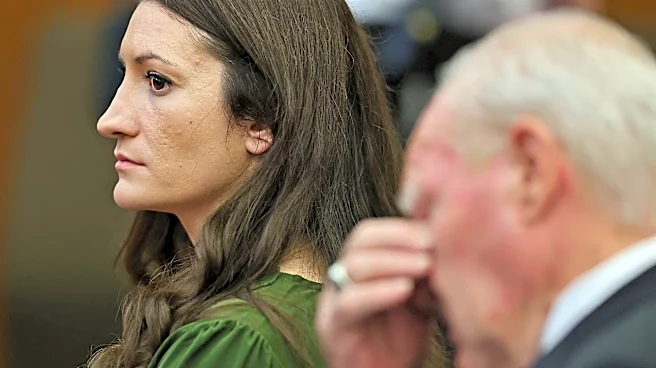
A mistrial has been declared in the Lindsay Clancy case, prompting one of the holdout jurors, Michael P. Desronvil, to publicly defend his stance. Criminal defense attorney Mercedes Colwin analyzed Desronvil's statement on 'Fox News Live,' discussing
the implications for the prosecution in Massachusetts. The case has garnered significant attention, and the mistrial means that a definitive legal outcome has not yet been reached. Desronvil's defense of his vote highlights the complexities and challenges inherent in jury deliberations, particularly in high-profile cases where public sentiment and legal arguments can diverge. The legal proceedings are now at a critical juncture, with various options being considered by the prosecution.
Why It's Important?
The mistrial in the Lindsay Clancy case underscores the intricate nature of the U.S. justice system and the significant power vested in individual jurors. A holdout juror's decision can prevent a unanimous verdict, leading to a mistrial and prolonging legal proceedings. This situation can have profound impacts on all parties involved, including the defendant, victims' families, and the public. For the prosecution, a mistrial necessitates a re-evaluation of their strategy, potentially leading to a retrial, a negotiated plea deal, or even the dropping of charges. The public defense by a juror also raises questions about the transparency and public perception of jury decisions, especially when they deviate from widely held expectations. This case highlights the importance of jury selection and the challenges of achieving consensus in emotionally charged legal battles.
What's Next?
Following the mistrial, prosecutors in Massachusetts face several potential paths forward. One primary option is to pursue a retrial, which would involve presenting the case again to a new jury. This decision would require careful consideration of the evidence, witness availability, and the financial and logistical resources required for another full trial. Alternatively, the prosecution might explore a negotiated plea deal with Lindsay Clancy's legal team, aiming to reach a resolution outside of court. The specifics of such a deal would depend on various factors, including the strength of the evidence and the willingness of both sides to compromise. The defense will also be strategizing, potentially seeking to leverage the mistrial to their client's advantage. The legal battle is expected to continue, with significant public and media attention remaining on the case.
Beyond the Headlines
The Lindsay Clancy mistrial and the subsequent public statement by a holdout juror delve into the deeper ethical and procedural dimensions of the U.S. judicial system. The concept of a 'holdout juror' often sparks public debate about the role of individual conscience versus collective decision-making in justice. It highlights the tension between the legal requirement for unanimous verdicts in serious criminal cases and the diverse interpretations of evidence by different individuals. This situation can also expose potential flaws in the initial presentation of evidence or arguments by either the prosecution or defense, prompting a re-evaluation of legal strategies. Furthermore, the public defense by a juror, while rare, can influence public trust in the jury system and spark discussions about juror anonymity and protection from public scrutiny. The long-term implications could include renewed calls for reforms in jury instructions or deliberation processes to minimize the likelihood of mistrials in complex cases.