



What's Happening?
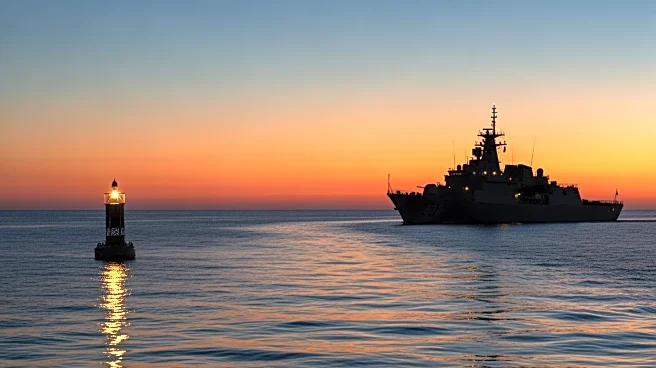
Iran has announced plans to conduct live-fire military drills in the Strait of Hormuz, a critical maritime passage that handles 20% of the world's oil transport. This announcement comes just two days after the United States revealed its own military exercises
in the region. The Iranian warning was issued to all ships in the area, indicating that naval shootings would occur on Sunday and Monday. The U.S. military presence in the region has been bolstered by the arrival of the USS Abraham Lincoln aircraft carrier and its strike group, along with a squadron of F-15E Strike Eagle fighter jets. The U.S. exercises aim to demonstrate the ability to deploy and sustain combat airpower across the region, amidst escalating tensions between Washington and Tehran.
Why It's Important?
The Strait of Hormuz is a strategic chokepoint for global oil supplies, and any military activity in the area can have significant implications for international energy markets and geopolitical stability. The U.S. and Iran have a history of tensions, particularly over Iran's nuclear program and its regional influence. The presence of U.S. military assets in the region is a show of force intended to deter Iranian aggression and reassure allies. However, Iran's decision to conduct its own drills could escalate tensions further, potentially leading to confrontations that might disrupt oil shipments and impact global oil prices.
What's Next?
The international community will be closely monitoring the situation in the Strait of Hormuz. The U.S. and its allies may increase diplomatic efforts to de-escalate tensions and prevent any military confrontation. Meanwhile, shipping companies and oil markets will be on high alert for any disruptions. The outcome of these military exercises could influence future U.S.-Iran relations and impact ongoing negotiations over Iran's nuclear program.