







What's Happening?
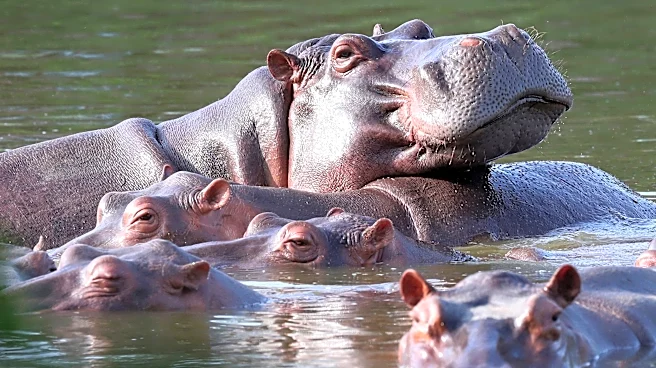
Colombian authorities have approved a plan to cull dozens of hippos that are descendants of those brought to the country by Pablo Escobar in the 1980s. These hippos, which have become a threat to local ecosystems and communities, are the only wild population
outside Africa. The decision follows unsuccessful attempts to control their population through neutering and relocation. The hippos have become a tourist attraction, but their presence poses significant environmental challenges. The culling plan aims to preserve native species and protect villagers from potential dangers posed by the hippos.
Why It's Important?
The decision to cull the hippos highlights the ongoing struggle between conservation efforts and animal welfare. While the hippos pose a real threat to Colombia's biodiversity and human safety, the culling has sparked controversy among animal rights activists. This situation underscores the complexities of managing invasive species and the long-term consequences of human actions on ecosystems. The outcome of this culling operation could influence future wildlife management policies and practices, both in Colombia and internationally, as countries grapple with similar challenges.
What's Next?
The Colombian government has not announced a specific timeline for the culling, but it is expected to proceed as part of efforts to manage the hippo population. Animal rights groups are likely to continue opposing the cull, advocating for alternative solutions. The situation may prompt further discussions on wildlife management and conservation strategies, particularly in regions where invasive species pose significant challenges. The outcome of this culling operation could influence future policies and actions regarding invasive species management in Colombia and beyond.