



What's Happening?
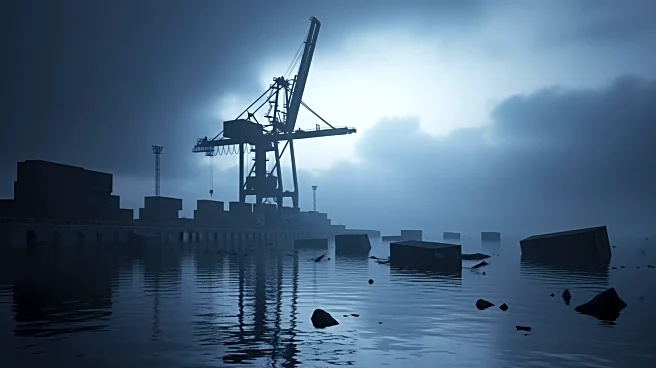
Ukraine's Black Sea ports, including Chornomorsk and Pivdennyi, are facing continuous attacks from Russian drones and missiles. These attacks are part of a broader offensive despite international efforts, led by the United States and European leaders,
to broker a peace agreement. The Ukrainian Navy has reported significant damage to port infrastructure, with commercial vessels also being affected. The Greek-owned vessel Captain Karam, registered in Panama, was loading wheat when it was caught in the crossfire. Additionally, the Emmarkis III, a Russian-owned bulker detained by Ukraine since July 2022, sustained damage during the attacks. Ukrainian Deputy Prime Minister Oleksiy Kuleba has accused Russia of targeting port infrastructure to disrupt logistics and complicate shipping. Besides the damage to vessels, a privately owned storage tank for vegetable oil and manufacturing plants elsewhere in Ukraine have also been hit.
Why It's Important?
The ongoing attacks on Ukraine's ports have significant implications for global trade and regional stability. The Black Sea ports are crucial for Ukraine's export economy, particularly for agricultural products like wheat. Disruptions in these ports can lead to increased global food prices and supply chain issues. The damage to infrastructure and vessels also highlights the broader economic impact of the conflict, affecting shipping companies and insurers. Politically, the attacks underscore the challenges in reaching a peace agreement and the potential for further escalation. The situation puts pressure on international stakeholders to intensify diplomatic efforts to resolve the conflict and mitigate its economic repercussions.
What's Next?
The continued targeting of Ukraine's ports suggests that further disruptions in shipping and logistics are likely. This could prompt increased international diplomatic efforts to secure a ceasefire or peace agreement. The Ukrainian government may seek additional support from international allies to bolster its defense capabilities and protect critical infrastructure. Meanwhile, shipping companies might reroute vessels to avoid the conflict zone, potentially increasing costs and transit times. The situation could also lead to heightened tensions between Russia and Western nations, influencing future geopolitical dynamics.