





What's Happening?
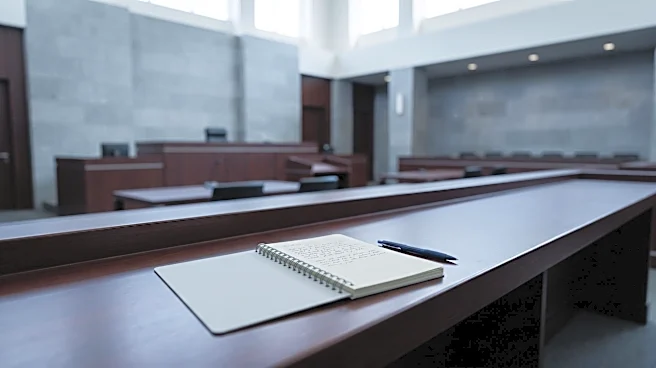
High school students in San Jose have established "Justice For All," a non-profit organization dedicated to court-watching. This initiative, started by students from Evergreen Valley High and Leland High, aims to monitor court proceedings for fairness
and equity. The program has expanded significantly, now boasting a national network of over 350 students across five states, including Texas and New York. These student observers attend court sessions, meticulously taking notes and filling out forms to track trends, judicial behavior, and potential disparities in treatment, particularly concerning bail decisions, interpreter access, and overall courtroom tone. Their observations have led to articles highlighting issues such as language barriers and racial disparities in pretrial release.
Why It's Important?
The "Justice For All" program is significant as it empowers young people to actively engage with the U.S. justice system, fostering civic participation and promoting transparency. By systematically observing and documenting court proceedings, these students contribute to accountability within the judiciary and raise awareness about critical issues such as fairness, equity, and access to justice. Their work provides valuable data that can inform discussions on judicial reform and highlight areas where the system may fall short. This initiative also serves as an educational platform, demystifying court processes for students and potentially inspiring future legal professionals. The expansion of the program across multiple states demonstrates a growing interest among youth in monitoring and influencing the legal landscape, potentially leading to a more informed and engaged citizenry.
What's Next?
The "Justice For All" program is expected to continue its expansion, with more students and chapters potentially joining its national network. The data collected by these student observers will likely continue to be compiled and analyzed, potentially leading to more in-depth reports and advocacy efforts. The organization's findings could be presented to legal professionals, policymakers, and civil rights groups, influencing discussions on judicial practices and reforms. The students involved are gaining invaluable experience and insight into the legal system, which may shape their future career paths and civic engagement. The program's success could also inspire similar youth-led initiatives in other areas of public policy and governance, fostering a new generation of active and informed citizens.
Beyond the Headlines
The "Justice For All" program transcends simple observation, touching upon fundamental principles of democratic oversight and the role of an informed citizenry. By making courtrooms less intimidating and more accessible, these students are challenging the perception of the justice system as an opaque institution. Their focus on subtle cues, like a judge's tone or the availability of interpreters, highlights the human element within legal proceedings and how seemingly minor details can impact justice. This initiative also underscores the power of collective action and data-driven advocacy, demonstrating that even young, non-legal professionals can contribute meaningfully to systemic change. The program's emphasis on equity and fairness speaks to broader societal aspirations for a justice system that truly serves all, regardless of background or circumstance. It's a testament to the idea that transparency and public scrutiny are vital for maintaining the integrity and legitimacy of legal institutions.