





What's Happening?
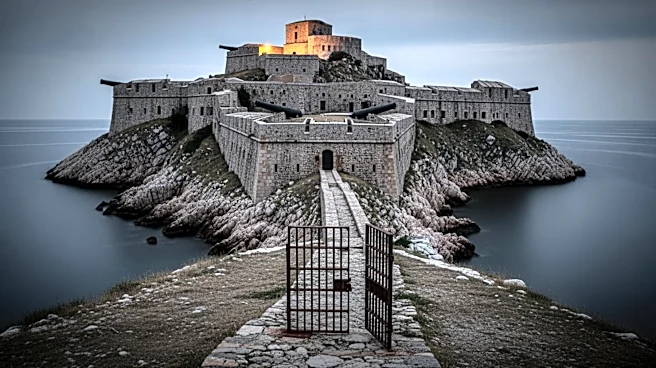
Alcatraz Island, located in San Francisco Bay, is widely known for its role as a federal prison housing some of America's most notorious criminals. However, its history as a military fort during the Civil War is less well-known. Initially designated as a military reservation
by President Millard Fillmore in 1850, Alcatraz was fortified to protect the strategic port of San Francisco following the Mexican-American War and the California Gold Rush. By 1854, it was operational as a military fort, forming part of a defensive network known as the 'Triangle of Defense' alongside Fort Point and Lime Point. During the Civil War, Alcatraz served as a key defensive stronghold and prison for Confederate sympathizers and prisoners of war. Its strategic importance was underscored by its arsenal of 111 cannons and its role in preventing enemy ships from entering San Francisco Bay.
Why It's Important?
The transformation of Alcatraz from a military fort to a federal prison reflects broader themes in American history, including the evolution of military strategy and the federal government's approach to law and order. During the Civil War, Alcatraz played a crucial role in maintaining Union control over California, a state with divided loyalties. Its later use as a federal prison for high-profile criminals like Al Capone and George 'Machine Gun' Kelly highlights the federal government's efforts to manage crime and maintain public order during periods of social upheaval. The island's history as both a military and correctional facility underscores its significance as a symbol of federal authority and its enduring place in American cultural memory.
What's Next?
Although Alcatraz ceased operations as a federal prison in 1963, its legacy continues to captivate the public imagination. Recent efforts to preserve and document the island's history, such as the creation of a 3D digital twin, aim to safeguard its historical significance against threats like climate change. These initiatives highlight the ongoing importance of Alcatraz as a site of historical and cultural interest, offering new insights into its past and ensuring its stories are preserved for future generations.
Beyond the Headlines
Alcatraz's layered history offers a unique lens through which to explore themes of isolation, security, and federal power. Its evolution from a military fort to a notorious prison mirrors broader societal shifts and challenges, including the balance between security and civil liberties. The island's enduring mystique, fueled by stories of infamous inmates and daring escape attempts, continues to shape its cultural legacy, making it a powerful symbol of both punishment and resilience.