


What's Happening?
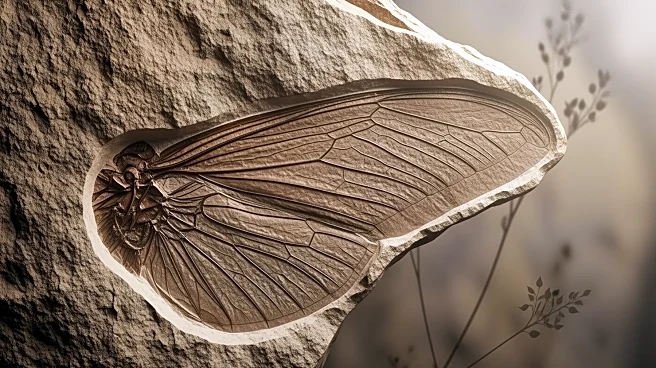
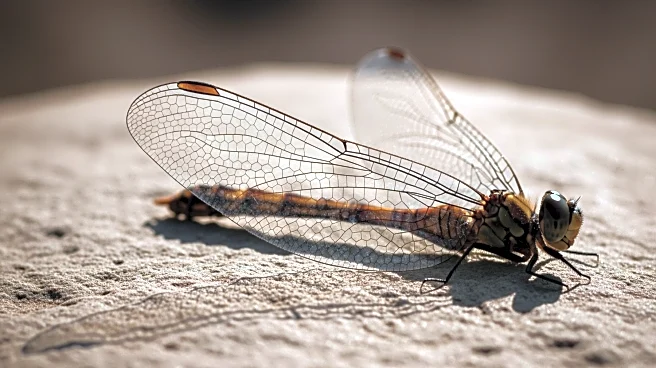
Recent research published in Nature challenges the long-held belief that giant dragonflies, known as griffinflies, went extinct due to changes in atmospheric oxygen levels. These insects, which lived around 300 million years ago, were thought to require
high oxygen levels to sustain their large size and energy-intensive flight. However, the study of modern flying insects' muscles suggests that the tracheal system, responsible for oxygen delivery, is not a limiting factor for body size. The research indicates that griffinflies could have survived in today's atmosphere, suggesting other factors, such as predation or ecological changes, may have contributed to their extinction.
Why It's Important?
This research has significant implications for our understanding of evolutionary biology and the factors that influence species survival and extinction. By debunking the oxygen level hypothesis, scientists can explore alternative explanations for the extinction of large prehistoric insects. This could lead to a broader understanding of how environmental changes impact biodiversity and the resilience of ecosystems. Additionally, the findings may influence how current and future species are studied in relation to climate change and habitat alterations.
Beyond the Headlines
The study highlights the adaptability of insect respiratory systems and their potential to evolve in response to environmental changes. This adaptability could be crucial for understanding how modern insects might cope with current and future shifts in climate and atmospheric conditions. The research also underscores the importance of revisiting established scientific theories with new data and methodologies, which can lead to groundbreaking insights and advancements in the field of paleobiology.