








What's Happening?
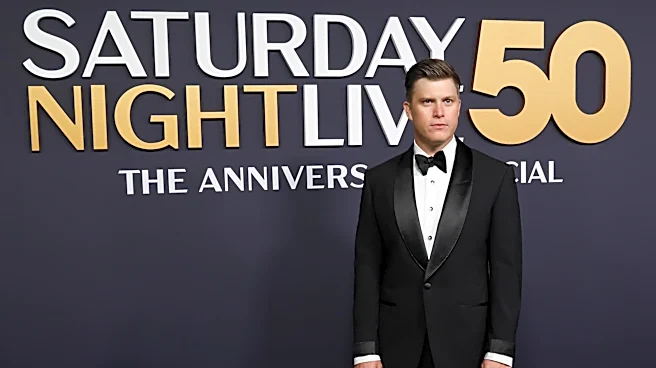
A recent 'Saturday Night Live' sketch, hosted by John Mulaney, has gone viral for its comedic take on elder care responsibilities, particularly highlighting the disproportionate burden often placed on women. The sketch features a fake advertisement for a service
called 'Sister,' which offers free, 24/7 elder care provided by one's own sister. The humor stems from the implied expectation that sisters will naturally assume these caregiving roles, allowing men to avoid the responsibilities. Liz Plank, a writer and host of the podcast 'Boy Problems,' discussed the sketch's impact, noting that it resonated deeply with many women who shared it in group chats, expressing both laughter and grief over the accuracy of the portrayal. The sketch taps into the reality that three in five family caregivers are women, often performing unpaid labor that can hinder their financial and professional advancement.
Why It's Important?
The viral nature of the 'Sister' sketch underscores a significant societal issue in the U.S. regarding gender roles in caregiving. The sketch, while comedic, brings to light the often-unacknowledged emotional and practical labor women undertake for their families, particularly in elder care. This unpaid work not only prevents women from accumulating wealth and advancing in their careers but also creates resentment within relationships, as highlighted by Plank. The discussion generated by the sketch emphasizes the need for a more equitable distribution of caregiving responsibilities and greater access to mental health services, which could alleviate some of the pressure on caregivers. The lack of engagement from men in discussions about the sketch, as noted by Plank, further illustrates the gender disparity in acknowledging and addressing these issues.
What's Next?
The viral discussion surrounding the 'Sister' sketch could potentially lead to increased awareness and conversations about the gendered nature of elder care in the U.S. It may encourage more families to critically examine their own caregiving dynamics and prompt a broader societal dialogue on how to better support caregivers, particularly women. Advocacy groups and policymakers might leverage this public discourse to push for improved access to affordable elder care services and mental health support, which could help distribute the caregiving burden more evenly. The sketch's impact could also inspire further comedic or artistic explorations of similar social issues, continuing to bring these often-overlooked challenges into the public consciousness.
Beyond the Headlines
The 'Sister' sketch delves into deeper implications beyond immediate caregiving responsibilities, touching upon the pervasive influence of patriarchal structures on family dynamics and individual well-being. The sketch's ending, which suggests the 'Sister' offer is void if she has a good therapist, sparked criticism from Plank, who viewed it as an attempt to blame women for a problem they didn't create. This highlights the ethical dimension of placing the onus of emotional and practical labor on women, even when they seek professional support. The sketch implicitly questions the cultural programming that leads to such unequal distributions of labor and the long-term impact on women's mental health and overall quality of life. It serves as a cultural mirror, reflecting the ongoing struggle for gender equity within the private sphere of family life.