





What's Happening?
In Newberry, Florida, city, state, and University of Florida leaders have initiated the groundbreaking of the Harvest Singularity project, a significant agricultural technology endeavor. This project involves the construction of two high-tech hydroponic
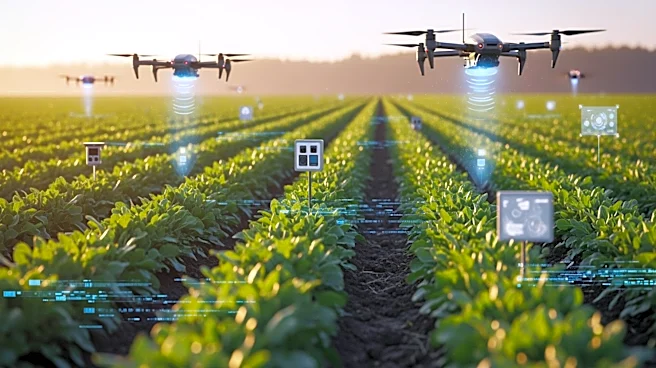
greenhouses at the AgFoodTech Innovation Park, representing an investment exceeding $130 million. The initiative aims to position Newberry as a leader in agriculture technology and controlled-environment agriculture (CEA). The greenhouses will utilize robotics, artificial intelligence, and water-based growing systems to produce leafy greens year-round, using less land and water than traditional farming. The project is supported by a $5.6 million grant from the Florida Job Growth Grant Fund, which will aid in infrastructure improvements. The first greenhouse is expected to open in 2027, with the project anticipated to create hundreds of jobs and attract further agricultural and technology companies to the area.
Why It's Important?
The Harvest Singularity project is poised to significantly impact the agricultural sector by introducing advanced technology to traditional farming practices. By employing hydroponic systems and artificial intelligence, the project promises to enhance food production efficiency and sustainability. This initiative not only supports local economic growth through job creation but also positions Newberry as a potential hub for agricultural innovation. The project's success could serve as a model for other regions, promoting the adoption of technology-driven farming methods across the U.S. This shift could lead to more sustainable agricultural practices, reducing the environmental footprint of food production and potentially influencing national agricultural policies.
What's Next?
As the project progresses, stakeholders will focus on completing the construction of the greenhouses and ensuring the integration of advanced technologies. The opening of the first greenhouse in 2027 will be a critical milestone, potentially attracting more investment and interest from other agricultural and tech companies. Local leaders and project partners will likely engage in efforts to market Newberry as a center for agricultural innovation, aiming to draw additional businesses and research initiatives to the area. The project's development will be closely watched by industry experts and policymakers, who may consider similar approaches to modernize agriculture in other regions.