



What's Happening?
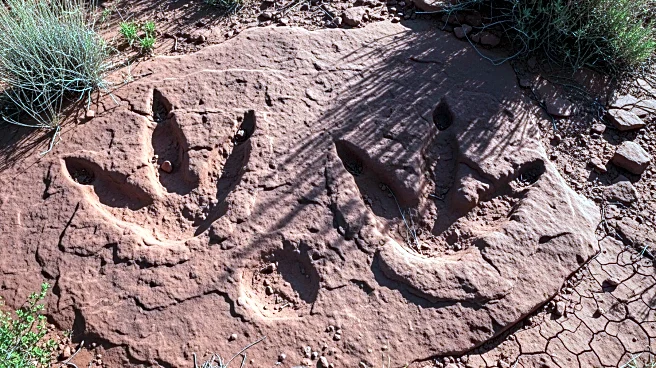
In the remote Kimberley region of Western Australia, researchers have discovered dinosaur footprints of unprecedented size, some measuring over 1.7 meters in length. These footprints, etched into the tidal flats over 130 million years ago, were left by
sauropods, which are among the largest animals to have ever walked the Earth. The site, studied by scientists from the University of Queensland, contains a diverse range of 21 different dinosaur track types, making it one of the richest fossil tracksites ever found. The tracks were found in a remote section of the Kimberley coast, where the rock formations record a time when the area was a river delta. The discovery was made possible through the efforts of the Goolarabooloo people, who had long been aware of the ancient footprints and alerted scientists when the area was considered for industrial development.
Why It's Important?
This discovery is significant as it provides valuable insights into the diversity and scale of dinosaur life during the Cretaceous period. The size and variety of the tracks contribute to the site's global importance, offering a rare glimpse into the past ecosystems. The findings highlight the importance of preserving such sites, which can offer critical information about prehistoric life and environments. The involvement of the Goolarabooloo people underscores the role of indigenous knowledge in scientific discoveries, emphasizing the need for collaboration between scientists and local communities in preserving cultural and natural heritage.