





What's Happening?
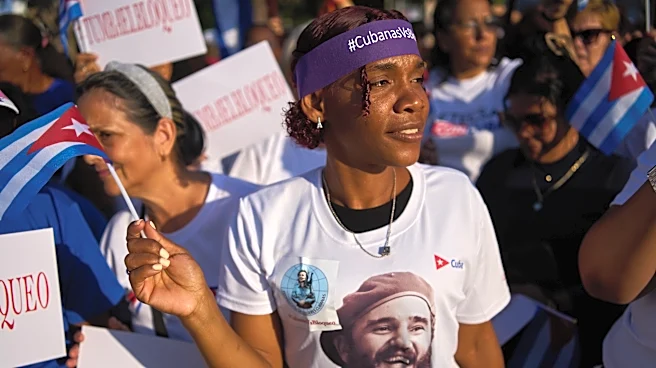
In a recent interview with NBC News, Cuban President Miguel Díaz-Canel stated he would not step down despite U.S. pressure. He emphasized that Cuban leadership is determined by the Cuban people, not external forces. The interview comes as Cuba faces an energy
crisis, attributed to a U.S. blockade that has disrupted oil supplies, affecting public services and the economy. Díaz-Canel expressed a willingness to engage in dialogue with the U.S. but rejected any demands for changes in Cuba's political system. The situation is further complicated by recent oil shipments from Russia, which have temporarily alleviated the crisis.
Why It's Important?
Díaz-Canel's defiance against U.S. pressure highlights the resilience of Cuba's political stance amidst external challenges. The U.S. blockade has severe implications for Cuba's economy, affecting healthcare, transportation, and production. This situation underscores the broader impact of U.S. foreign policy on Cuba and its citizens, potentially influencing regional stability and international relations. The Cuban government's position may affect future diplomatic engagements and economic interactions between the two countries, with significant consequences for regional geopolitics.
What's Next?
As tensions persist, further diplomatic discussions between the U.S. and Cuba are anticipated. The U.S. may continue to use economic sanctions to influence political changes in Cuba, while Cuba seeks to uphold its sovereignty and political system. The outcome of these talks could shape the future of U.S.-Cuba relations, impacting trade, travel, and regional alliances. Political leaders and international organizations will likely monitor these developments closely, considering their potential impact on global diplomacy.