



What's Happening?
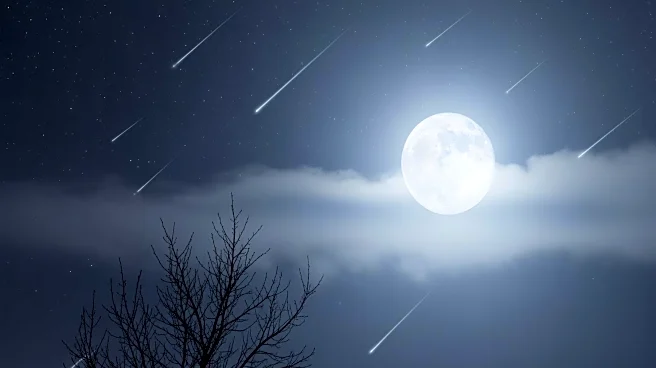
The Quadrantid meteor shower, known for its intense annual display, is expected to be significantly hindered in 2026 due to the timing of a full moon. The peak of the meteor shower is predicted to occur at 5 p.m. EST on January 3, which coincides with
daylight hours for much of North America. Additionally, the full moon will be present throughout the night, flooding the sky with bright moonlight and obscuring all but the brightest meteors. The Quadrantid meteors, which radiate from the constellation Boötes, are typically best viewed just before dawn when the radiant is higher in the northeastern sky. However, the full moon's presence will make it challenging to observe the shower this year.
Why It's Important?
The Quadrantid meteor shower is one of the most anticipated astronomical events each year, offering a spectacular display of meteors under ideal conditions. The full moon's interference in 2026 highlights the challenges faced by astronomers and skywatchers in observing celestial events. This situation underscores the importance of timing and environmental conditions in astronomical observations. The inability to fully experience the Quadrantids this year may lead to disappointment among enthusiasts and could impact public interest in skywatching activities. However, it also serves as a reminder of the unpredictable nature of space observation and the need for flexibility in planning such events.
What's Next?
Looking ahead, the Quadrantid meteor shower is expected to offer a much better viewing experience in 2028. The peak of the shower is predicted for 5 a.m. EST on January 4, 2028, which will favor eastern North America. Additionally, the moon will be in a more favorable phase, a waxing crescent, which will not interfere with meteor viewing. This future event is anticipated to be one of the best meteor displays of 2028, providing an opportunity for skywatchers to enjoy the Quadrantids without the hindrance of moonlight.