


What's Happening?
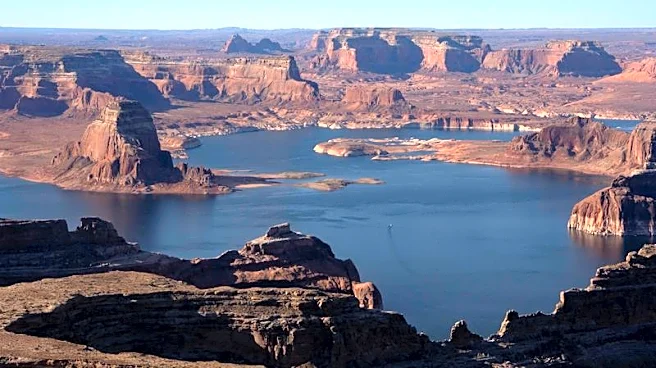
The federal government has unveiled a 10-year plan to manage water shortages along the Colorado River, proposing significant reductions in water allocations for Nevada. The Bureau of Reclamation's plan, which follows months of negotiations, aims to address
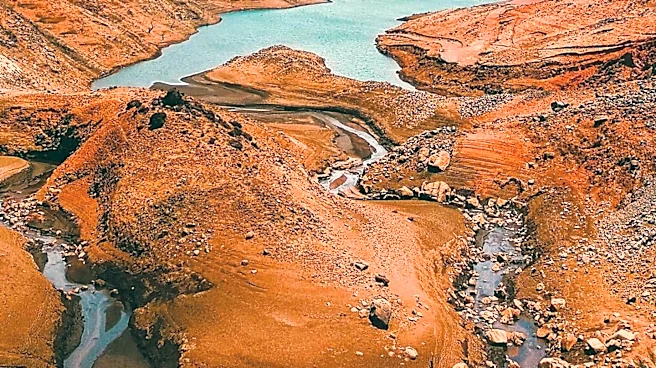
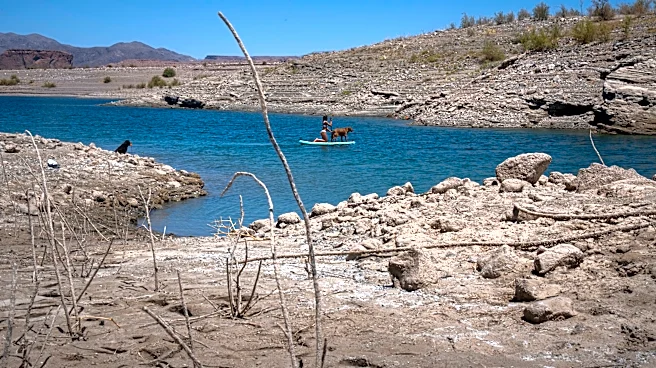
the declining water levels in Lakes Mead and Powell. Nevada Governor Joe Lombardo criticized the plan, calling the proposed reductions 'unrealistic' and warning of potential economic and environmental impacts. The plan requires Lower Basin states to reduce water use by up to 3 million acre-feet annually during dry years, while Upper Basin states are not subject to mandatory cutbacks.
Why It's Important?
The Colorado River is a critical water source for millions of people and industries across the southwestern United States. The proposed reductions could have significant implications for agriculture, urban water supply, and economic activities in the affected states. The plan's emphasis on shared sacrifice highlights the need for collaborative solutions to address water scarcity. However, the perceived imbalance in the distribution of cutbacks may exacerbate tensions among the basin states, potentially hindering future cooperation and consensus-building efforts.
What's Next?
The first operating plans for 2027 and 2028 are expected to be released soon, providing more detailed guidance on water management strategies. Stakeholders, including state governments and water authorities, will likely continue negotiations to reach a consensus on equitable water distribution. The plan's implementation will be closely monitored, with potential legal challenges or policy adjustments if the proposed reductions prove unmanageable. The situation underscores the urgency of developing sustainable water management practices in the face of climate change and increasing demand.