



What's Happening?
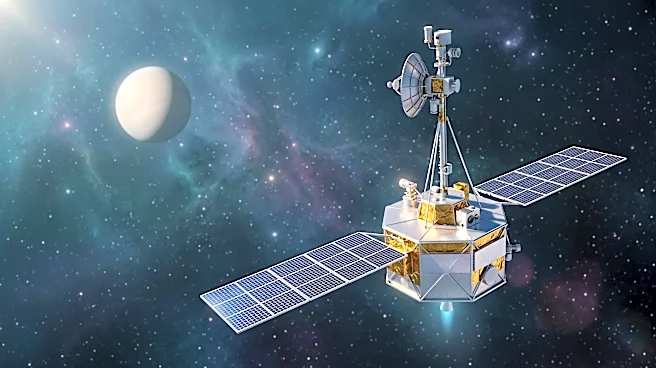
On September 4, 1962, NASA's Mariner 2 spacecraft successfully executed the first-ever rocket maneuver in deep space. This mid-course correction was crucial for adjusting its trajectory towards Venus, just eight days after its launch. The maneuver involved
five distinct commands from mission control, instructing the spacecraft to roll, pitch, turn, and fire its engine. This precise adjustment was necessary because the Atlas-Agena rocket that launched Mariner 2 did not achieve the required accuracy for a direct course to Venus. Without this correction, Mariner 2 would have missed Venus by a significant margin, passing within 238,600 miles (384,000 kilometers) of the planet's center. The successful burn, which lasted approximately 36 minutes, set Mariner 2 on a path for a much closer flyby of 21,607 miles (34,773 km). One hundred days later, Mariner 2 became the first spacecraft to successfully fly by another planet.
Why It's Important?
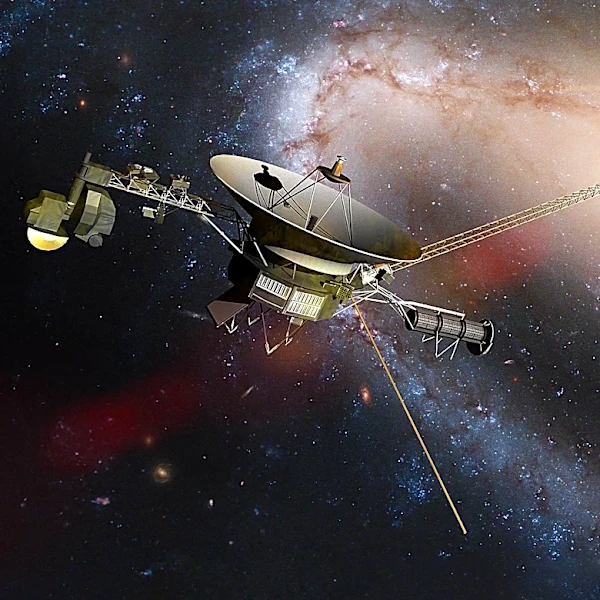
This pioneering deep space maneuver by Mariner 2 marked a monumental achievement in space exploration, demonstrating the capability to correct spacecraft trajectories far from Earth. In 1962, the concept of reaching another planet with a probe was still largely theoretical, making this feat a significant step forward for NASA and the global space community. The ability to perform mid-course corrections transformed mission planning, allowing for greater flexibility and precision in interplanetary travel. This success laid the groundwork for future complex missions, including gravity assist flybys that enabled spacecraft like Voyager 2 to explore multiple outer planets. The lessons learned from Mariner 2's navigation and control systems were instrumental in developing the sophisticated techniques routinely used in modern space missions, proving that even with initial launch inaccuracies, missions could be salvaged and achieve their objectives through in-flight adjustments. This event underscored the importance of adaptability and advanced engineering in the pursuit of space exploration.
What's Next?
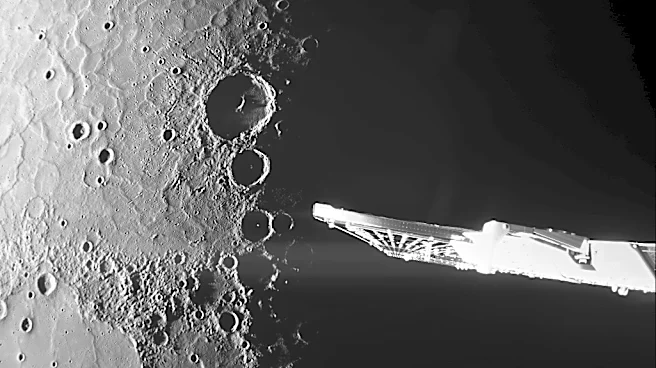
The success of Mariner 2's mid-course correction established a precedent for future space missions, making such maneuvers a standard, albeit critical, part of mission planning. Modern spacecraft, including the recently launched Roman Space Telescope, continue to perform similar trajectory adjustments. The BepiColombo mission to Mercury, for instance, recently executed its own mid-course event, releasing its two spacecraft after a series of maneuvers and planetary flybys. This ongoing reliance on in-flight corrections highlights their enduring importance in achieving mission objectives, especially as space agencies aim for increasingly distant and complex targets. The continuous refinement of these techniques will be crucial for upcoming missions, including those involving human exploration beyond Earth's orbit, ensuring that spacecraft can reach their destinations with precision and efficiency, even when initial launch parameters are not perfectly met.
Beyond the Headlines
The Mariner 2 mission's success in performing the first deep space maneuver had profound implications beyond its immediate scientific objectives. It fostered a new era of confidence in humanity's ability to navigate and control objects across vast cosmic distances. This technological leap not only enabled the exploration of other planets but also spurred advancements in telemetry, communication, and propulsion systems. The meticulous planning and execution required for such a maneuver highlighted the critical role of human ingenuity and collaboration in overcoming complex engineering challenges. Furthermore, it underscored the iterative nature of scientific and technological progress, where initial imperfections (like the Atlas-Agena rocket's launch accuracy) lead to innovative solutions that push the boundaries of what is possible. This foundational achievement continues to inspire new generations of scientists and engineers, demonstrating that with perseverance and innovation, seemingly insurmountable obstacles in space exploration can be overcome.