






What's Happening?
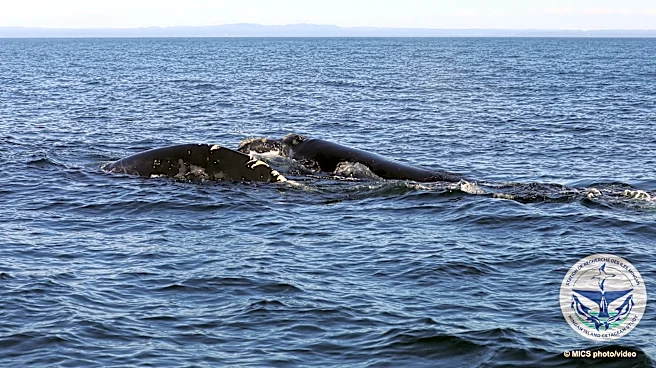
Researchers in Canada have captured images of a previously unidentified baby North Atlantic right whale off Anticosti Island in Quebec. This discovery, confirmed by scientists at the New England Aquarium in Boston, indicates the calf was likely born months
ago but went undocumented during winter surveys. The mother has been identified as Silt, a 38-year-old whale known to researchers. This finding increases the total number of baby right whales discovered from the most recent birthing season to 24, marking it as the most productive year for the species since 2009 and the fourth-highest count on record. North Atlantic right whales, numbering only about 380 globally, have experienced a population decline since 2010, making each new birth crucial for their survival. The whale was spotted by researchers from the Mingan Island Cetacean Study, a nonprofit organization, despite extensive boat-based and aerial surveys along the U.S. East Coast failing to detect it earlier.
Why It's Important?
The discovery of this new calf is significant for the critically endangered North Atlantic right whale population. With only about 380 individuals remaining and a decline in numbers since 2010, successful calving seasons are vital for the species' viability. The current season's count of 24 calves is a positive indicator, as there are only approximately 70 reproductive-age females left. The species has faced severe threats, including collisions with large ships and entanglement in commercial fishing gear. Ocean warming has exacerbated these dangers by causing whales to stray from protected areas. A particularly disastrous year in 2018 saw no births, highlighting the precariousness of their existence. While recent years have shown some population recovery since 2020, conservation efforts remain critical, especially in light of recent U.S. government decisions to delay new protections in favor of commercial fishing interests.
What's Next?
Scientists will continue to monitor the newly discovered calf and its mother, Silt, as part of ongoing efforts to track the North Atlantic right whale population. The extensive cataloging of these whales through photography will aid in understanding their movements, health, and reproductive success. Conservationists are likely to leverage this positive news to advocate for stronger protections for the species, particularly in response to recent governmental decisions that have prioritized commercial fishing interests over whale safety. Further research will focus on understanding why this calf went undetected for so long, which could inform future survey methods. The hope is that this successful birthing season will contribute to a sustained recovery of the population, though the long-term viability of the species still depends on mitigating threats from shipping and fishing industries.
Beyond the Headlines
The late discovery of this calf underscores the vastness and complexity of marine ecosystems, even for a species as extensively monitored as the North Atlantic right whale. It highlights the challenges inherent in conservation efforts for highly migratory and elusive marine animals. The fact that a 15,000-pound baby could go unnoticed for months speaks to the limitations of current survey technologies and the sheer scale of the ocean. This event also brings into sharper focus the ongoing tension between economic interests, such as commercial fishing, and environmental conservation. The debate over delaying whale protections for a decade reflects a broader societal challenge in balancing human economic activity with the preservation of endangered species. The survival of the North Atlantic right whale serves as a barometer for the health of marine environments and the effectiveness of international conservation policies.