



What's Happening?
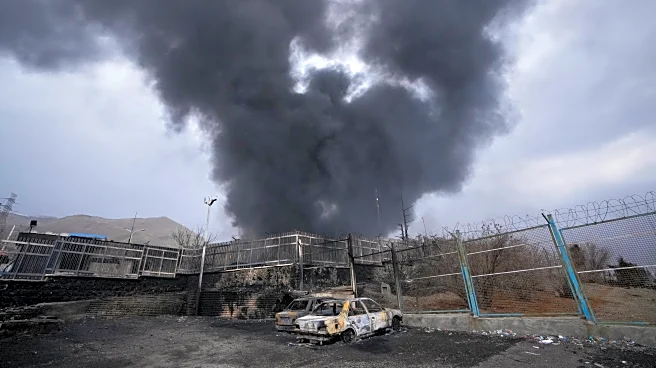
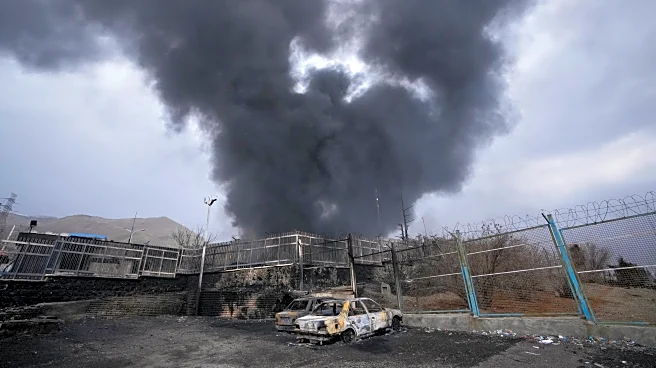
Oil prices experienced a significant drop after reaching a three-year high, following President Trump's prediction that the conflict in the Middle East could soon de-escalate. Brent futures decreased by $4.17 to $94.79 per barrel, while US West Texas
Intermediate crude fell by $3.81 to $90.96 per barrel. The price drop comes after a surge past $100 per barrel due to supply concerns amid the US-Israeli conflict with Iran. President Trump, in a CBS News interview, expressed confidence that the war against Iran was nearing completion, which helped ease market fears of prolonged supply disruptions. Additionally, discussions about easing oil sanctions on Russia and the potential release of emergency crude stockpiles contributed to the price decline.
Why It's Important?
The fluctuation in oil prices has significant implications for the global economy, particularly for industries reliant on oil. A decrease in oil prices can lead to lower costs for transportation and manufacturing, potentially reducing inflationary pressures. However, the situation remains volatile, with geopolitical tensions in the Middle East and potential policy changes regarding Russian oil sanctions influencing market stability. The energy sector, consumers, and businesses could benefit from stabilized prices, but the ongoing uncertainty underscores the fragility of global oil supply chains.
What's Next?
Future developments will depend on the geopolitical landscape and policy decisions by major oil-producing nations. If President Trump's predictions of de-escalation materialize, it could lead to further stabilization of oil prices. However, the response from Iran and other stakeholders, such as the potential easing of sanctions on Russia, will play a crucial role in shaping the market. Additionally, the G7's stance on strategic oil reserves and potential interventions could influence future price movements.