
What's Happening?
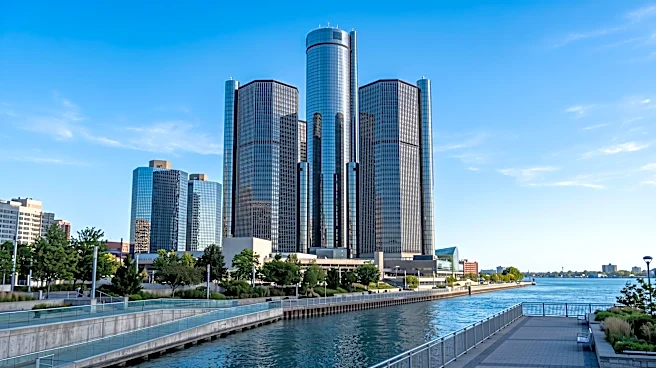
The Detroit City Council is poised to vote on a controversial $2.2 billion redevelopment plan for the Renaissance Center and East Riverfront. This plan includes a package of tax incentives totaling $548
million in public subsidies sought by developers Bedrock and General Motors, alongside a $133 million Community Benefits Agreement. The Planning and Economic Development Committee has advanced the proposal to the full council despite significant community concerns regarding the rushed timeline and transparency of the process. Council members, including Latisha Johnson and Gabriela Santiago-Romero, have voiced criticisms, with Santiago-Romero highlighting the 'very, very rushed' nature of the proceedings. Developers are pushing for quick approval to secure state tax breaks from the Michigan Strategic Fund before the winter recess.
Why It's Important?
This vote is critically important for Detroit's urban development and public policy. The approval of $548 million in public subsidies for the Renaissance Center redevelopment represents a substantial investment of taxpayer money, raising questions about fiscal responsibility and equitable resource allocation. The debate over the 'rushed' process and transparency reflects broader concerns about how large-scale development projects are negotiated and approved in U.S. cities, particularly regarding community input and benefits. The outcome will set a precedent for future public-private partnerships in Detroit and potentially other urban centers, influencing how community benefits agreements are structured and enforced. It also highlights the tension between economic development goals, often driven by developers seeking tax incentives, and the desire for robust public oversight and genuine community engagement.
What's Next?
The Detroit City Council could vote on the redevelopment plan as early as tomorrow. PED Committee Chair Latisha Johnson anticipates further discussion, suggesting the vote might not be immediate despite the developers' push for swift approval. Community members and advocates are urged to contact council members directly and participate in public comment periods. Council Member Mary Waters is also hosting a community meeting to discuss the RenCen plan. The developers' urgency stems from a desire to secure state tax breaks from the Michigan Strategic Fund before the winter recess. The decision will determine the future trajectory of a significant portion of Detroit's riverfront and will be closely watched by stakeholders interested in urban planning, economic development, and community advocacy.
Beyond the Headlines
The Detroit Renaissance Center redevelopment project encapsulates a complex interplay of economic revitalization, urban planning, and social equity. The controversy surrounding the speed of the approval process and the adequacy of community benefits reflects a persistent challenge in U.S. urban development: balancing the allure of large-scale investment with the imperative to ensure that growth benefits all residents, not just developers. The mention of Dan Gilbert's pledge of $1 billion to a nonprofit to run the development, and the council's desire to delve deeper into its specifics, highlights the evolving role of philanthropic and corporate social responsibility in urban renewal. This situation underscores the ethical and legal dimensions of public subsidies for private projects, particularly in cities with histories of economic hardship and social inequality, where trust between residents and developers can be fragile.