







What's Happening?
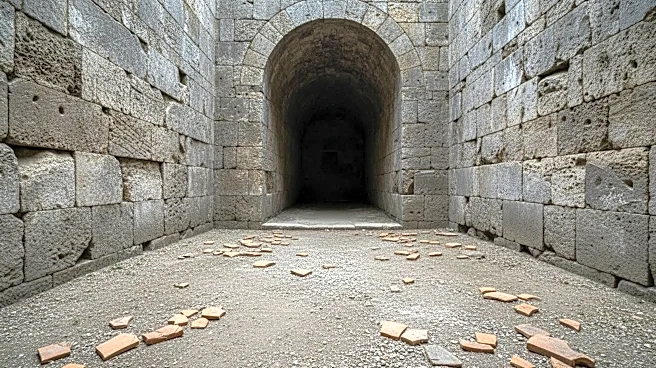
Archaeologists have uncovered a hidden chamber beneath Hadrian's Villa in Tivoli, Italy, which may be the oldest structure identified at the site. The discovery was announced by Pablo de Olavide University in Seville, Spain. The villa, once home to Emperor
Hadrian, is a UNESCO-listed site. The newly found underground structure dates back to the Roman Republic period, between 509 BC and 27 BC, predating Hadrian's reign. It was partially filled with ancient construction debris and ceramic materials, suggesting it may have been used as a silo or storage facility. The find is significant as it provides valuable information about the history of Hadrian's Villa, which was largely destroyed during the construction of the emperor's residence.
Why It's Important?
This discovery is crucial for understanding the historical context of Hadrian's Villa and the earlier structures that existed before the emperor's time. The unearthed chamber offers insights into the architectural practices and daily life during the Roman Republic period. It also helps fill gaps in the historical record, as much of the earlier villa was destroyed by Hadrian's construction. The findings, including ceramic pieces and architectural terracottas, could lead to a better understanding of the site's chronology and the period during which it was occupied. This contributes to the broader field of archaeology by enhancing knowledge of ancient Roman history and architecture.