






What's Happening?
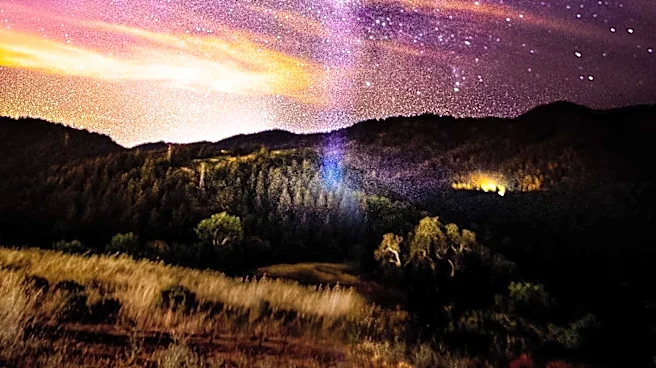
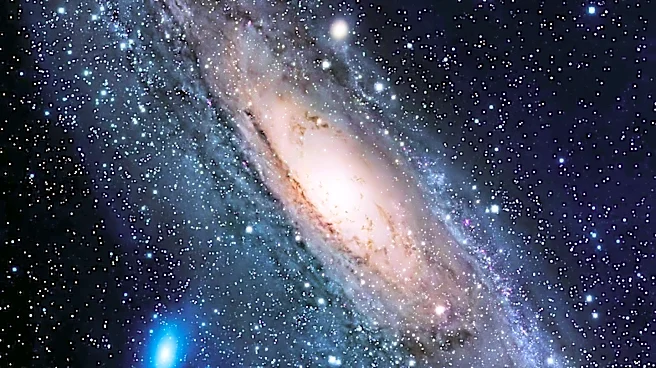
The Milky Way galaxy will be prominently visible in the night sky throughout July, offering a natural spectacle during the Fourth of July weekend. This period, known as 'Milky Way season,' spans from March to September, providing optimal viewing conditions
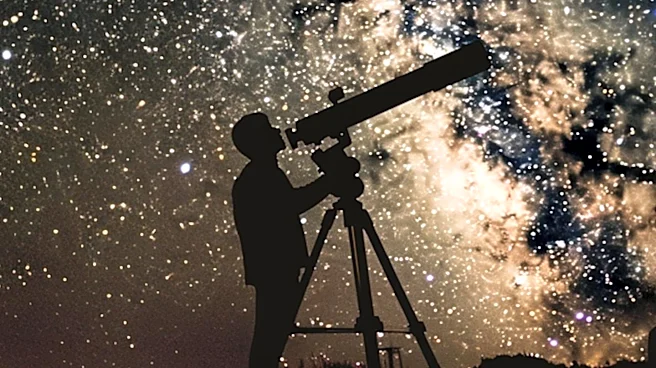
in the Northern Hemisphere. The galaxy's center, a bright and vibrant band of stars, will be visible without the need for special equipment, though dark locations away from city lights are recommended for the best experience. The peak viewing opportunity will occur around the new moon on July 14, when the sky is darkest. This celestial event coincides with Independence Day celebrations, offering an alternative light show to traditional fireworks.
Why It's Important?
The visibility of the Milky Way during July presents a unique opportunity for stargazers and the general public to connect with the cosmos. This natural phenomenon not only enhances public interest in astronomy but also encourages outdoor activities and tourism in areas designated as dark sky locations. Such events can boost local economies by attracting visitors seeking optimal stargazing experiences. Additionally, the widespread visibility of the Milky Way can inspire educational initiatives and increase awareness about light pollution, promoting efforts to preserve dark skies for future generations.
What's Next?
As the new moon approaches on July 14, interest in the Milky Way is expected to grow, potentially leading to increased attendance at stargazing events and gatherings. Organizations dedicated to astronomy and environmental conservation may use this opportunity to advocate for policies that reduce light pollution. Furthermore, the visibility of the Milky Way could inspire amateur astronomers and photographers to capture and share images of the galaxy, fostering a broader appreciation for the night sky. Continued public engagement with such celestial events may influence future urban planning and lighting regulations to preserve dark skies.