
What's Happening?
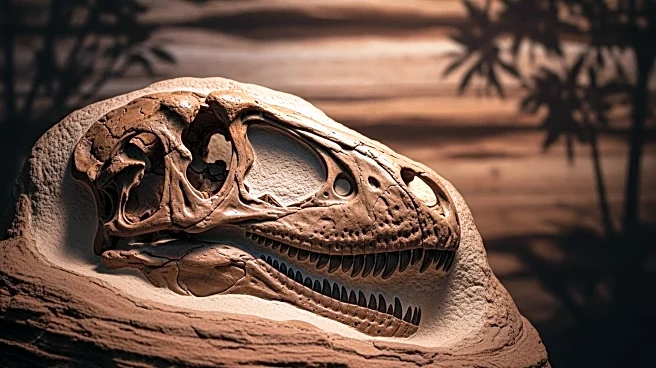
Researchers have uncovered a new spinosaurid dinosaur species in Thailand, dating back approximately 125 million years. This dinosaur, measuring about 25 feet in length, is one of the most complete spinosaurid specimens
found in Asia. The discovery was made in the Sam Ran locality of the Khok Kruat rock formation in northeastern Thailand. The spinosaurid, nicknamed the Sam Ran spinosaurid, exhibits characteristic features of the Spinosaurinae subfamily, such as elongated snouts and crocodile-like teeth. However, it also possesses unique traits, including shorter and more paddle-like spines compared to other known species. The findings were presented at the Society of Vertebrate Paleontology's annual meeting, although they have not yet been peer-reviewed.
Why It's Important?
This discovery is significant as it enhances the understanding of dinosaur diversity in Southeast Asia, suggesting a richer variety than previously known. The Sam Ran spinosaurid provides insights into the evolutionary history of spinosaurids, particularly in Asia, and their global distribution. The research indicates that these fish-eating predators were more widespread than earlier believed, contributing to the broader knowledge of prehistoric ecosystems and the evolutionary adaptations of dinosaurs. This finding could influence future paleontological studies and theories regarding the distribution and evolution of spinosaurids.
What's Next?
The researchers plan to submit their findings for peer review, which could lead to further validation and acceptance within the scientific community. Additional studies may focus on comparing the Sam Ran spinosaurid with other spinosaurid species to better understand their evolutionary relationships. This discovery may also prompt further exploration in the region to uncover more fossils, potentially leading to new insights into the diversity and adaptation of dinosaurs in Southeast Asia.