





What's Happening?
A new study published in the Proceedings of the National Academy of Sciences, led by ERG PhD student Emilia Chojkiewicz and co-authored by Duncan Callaway from UC Berkeley, suggests that hundreds of gigawatts (GW) of clean energy could be added to the U.S.
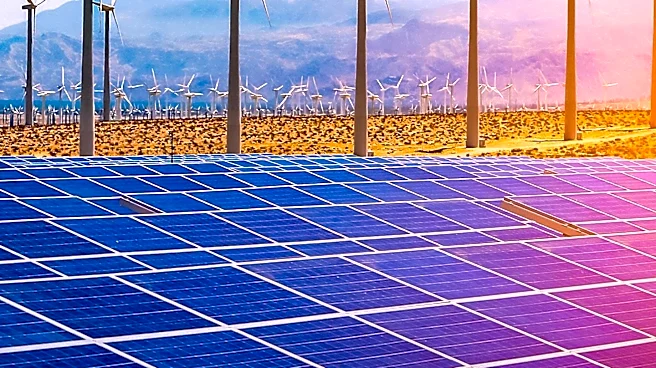
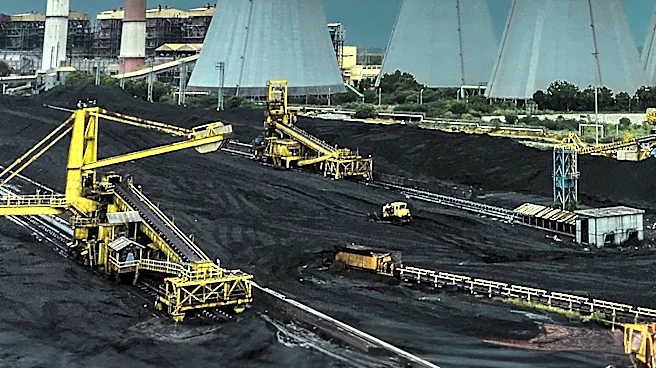
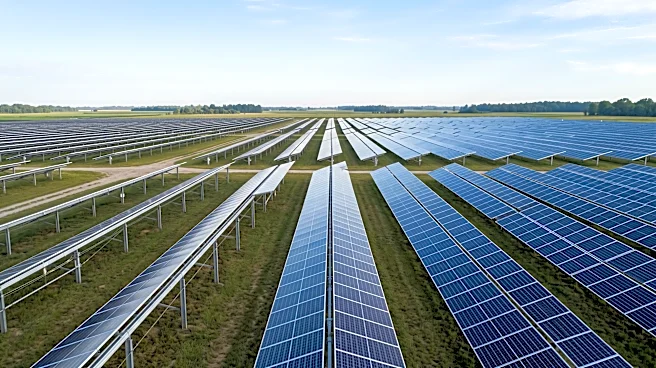
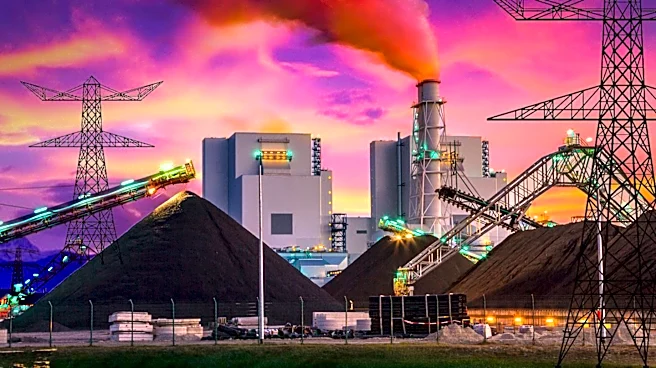
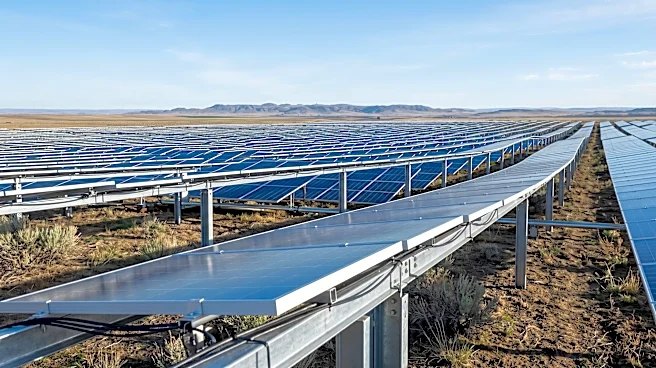
grid by utilizing existing power plant connections. This process, known as surplus interconnection, hybridization, or repowering, involves integrating utility-scale solar and wind projects or battery storage at current interconnection points. The research indicates that existing fossil fuel plants could host up to 597 GW of solar and wind capacity without exceeding their current interconnection limits. Additionally, an extra 260 GW could be added to existing renewable plants by pairing new solar panels or wind turbines with battery storage projects. This approach aims to address the projected 25% rise in peak power demand by 2030, driven by household electrification, manufacturing, and the growth of AI data centers, and to circumvent the current five-to-six-year wait for new projects to connect to the grid.
Why It's Important?
This study highlights a significant opportunity to accelerate the transition to clean energy in the United States, offering a potential solution to grid reliability concerns and rising electricity prices. By leveraging existing infrastructure, the proposed strategy could bypass the lengthy interconnection queues that currently delay new clean energy projects, thereby speeding up the deployment of renewable resources. This could have a substantial impact on the U.S. energy landscape, enhancing energy independence and reducing carbon emissions. The economic implications are also considerable, as faster integration of renewables could lead to more stable and potentially lower electricity costs for consumers and industries. Furthermore, it could bolster the competitiveness of the U.S. energy sector by providing a more efficient pathway for clean energy development, benefiting both environmental goals and economic growth.
What's Next?
The successful implementation of this strategy hinges on regulatory reforms to interconnection policies, as noted by the study's authors. Policymakers and regulatory bodies will need to evaluate and potentially revise existing frameworks to facilitate surplus interconnection, hybridization, and repowering at scale. This could involve streamlining permitting processes, updating grid codes, and incentivizing utilities to adopt these integration methods. Industry stakeholders, including power plant operators, renewable energy developers, and battery storage providers, will likely engage with regulators to advocate for changes that support these initiatives. The outcome of these discussions and subsequent policy adjustments will determine the extent to which this proposed solution can be realized, potentially leading to a faster and more efficient expansion of clean energy capacity across the U.S.
Beyond the Headlines
The concept of repurposing existing power plant sites for clean energy integration carries deeper implications beyond immediate energy supply. It represents a strategic shift in how the U.S. approaches energy infrastructure development, moving towards optimizing existing assets rather than solely building new ones. This approach could mitigate land-use conflicts often associated with large-scale renewable projects by utilizing already industrialized sites. Ethically, it offers a pathway for communities historically reliant on fossil fuel plants to transition to a clean energy economy, potentially preserving jobs and economic stability in those regions. Culturally, it could foster a narrative of innovation and adaptability within the energy sector, demonstrating how legacy infrastructure can be transformed to meet future environmental and energy demands. This could also set a precedent for other industries facing similar transitions.