







What's Happening?
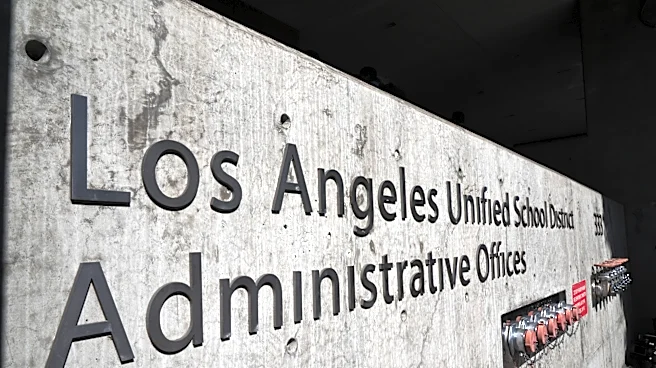
The Los Angeles Unified School District (LAUSD) recently reached agreements with its teachers' and administrators' unions to prevent a strike that would have affected approximately 400,000 students. The district agreed to a nearly 14 percent raise for
teachers and a 12 percent raise for administrators over two years. However, the support staff union had not initially reached an agreement, threatening to strike if their demands were not met. These demands included more work hours, fewer nonunion subcontractors, and the rescinding of a previous layoff of tech workers. Mayor Karen Bass intervened, resulting in the support staff union receiving a 24 percent raise over three years. The negotiations were seen as coercive, with unions leveraging their position to secure costly demands from the district.
Why It's Important?
The agreements reached by LAUSD highlight the challenges faced by public school districts in negotiating with unions, especially when strikes threaten to disrupt education for large numbers of students. The concessions made by the district could lead to increased financial strain, as the district is already projecting a $1.6 billion deficit for the 2027-2028 school year. Additionally, the district's declining enrollment, with a loss of about 75,000 students since the COVID-19 pandemic, exacerbates financial pressures, as state funding is tied to student enrollment. The situation underscores the broader issue of how public-sector unions can influence public policy and financial decisions, often resulting in higher taxes to meet union demands.
What's Next?
The financial implications of the agreements may lead to increased taxes in Los Angeles to cover the costs of the raises. The district will need to address its declining enrollment and financial deficit, potentially requiring further negotiations with unions to find sustainable solutions. Stakeholders, including parents and taxpayers, may push for reforms to ensure that educational outcomes improve alongside increased spending. The situation may also prompt discussions on the legality and ethics of public-sector strikes, as well as the role of unions in public education.
Beyond the Headlines
The negotiations between LAUSD and the unions reflect broader ethical and legal questions about the power dynamics in public-sector labor relations. The ability of unions to demand significant concessions raises concerns about the balance between employee rights and taxpayer interests. The situation also highlights the potential for political alliances to influence negotiations, as public officials may face pressure to align with union demands. Long-term, this could lead to shifts in public policy regarding union rights and the funding of public education.