
What's Happening?
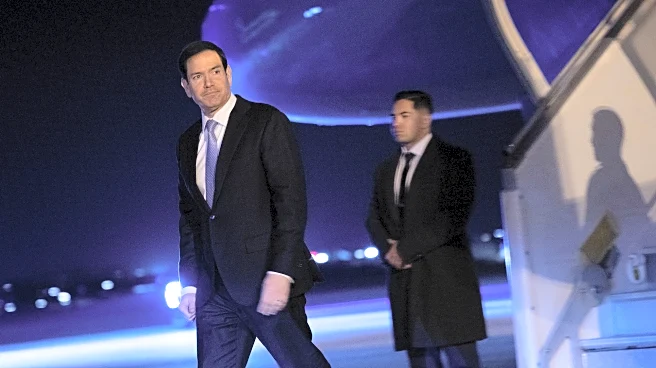
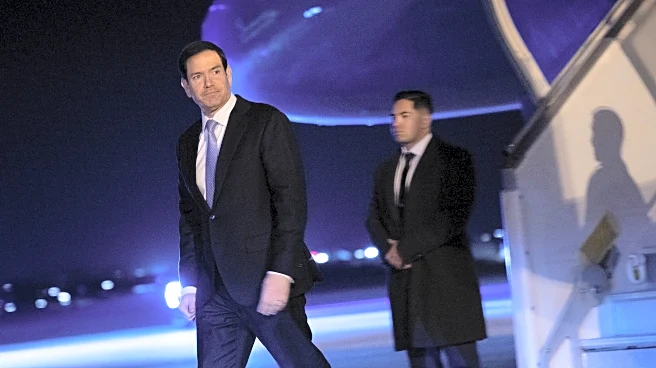
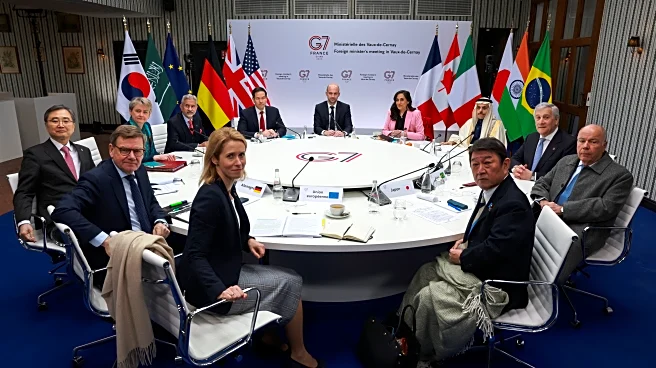
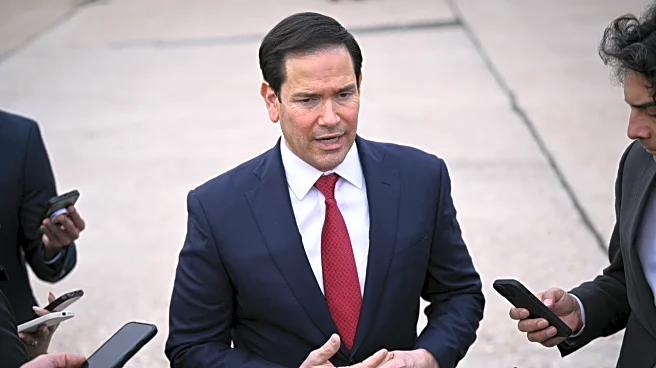
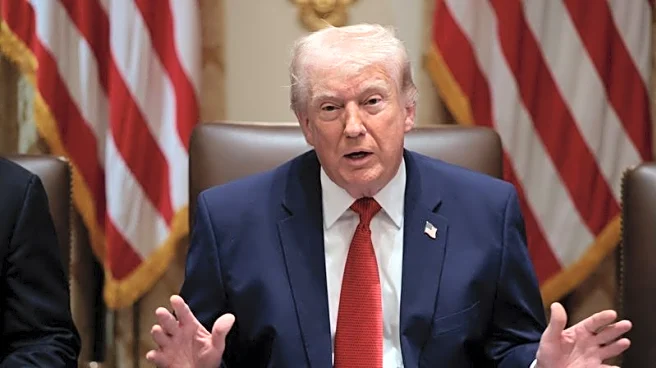
U.S. Secretary of State Marco Rubio is attending a Group of Seven (G7) meeting in France, where he faces the difficult task of convincing foreign ministers from allied nations to support the U.S. strategy in the ongoing Iran conflict. President Trump
recently criticized NATO countries for their reluctance to participate in the war, which has been met with skepticism by many of America's closest allies. Rubio's diplomatic efforts come after Trump's comments about NATO's lack of support, which have strained relations with European allies. The G7 meeting, held at a historic abbey near Paris, includes discussions on the Middle East conflict and the U.S. strategy, which has faced objections from most G7 nations.
Why It's Important?
The diplomatic tensions surrounding the Iran conflict have significant implications for international relations and U.S. foreign policy. The reluctance of NATO allies to support the U.S. strategy could impact the effectiveness of the alliance and its ability to address global security threats. The strained relations may also affect cooperation on other international issues, such as the ongoing conflict in Ukraine and efforts to secure the Strait of Hormuz. Rubio's ability to smooth over these tensions is crucial for maintaining strong alliances and ensuring collective security measures are in place.
What's Next?
Rubio's diplomatic efforts at the G7 meeting will likely continue as he seeks to garner support for the U.S. strategy in Iran. The outcome of these discussions could influence future military and diplomatic actions in the region. Additionally, the response from European allies may affect the U.S.'s approach to other international conflicts and its role in global security. The G7 meeting serves as a platform for addressing these issues and potentially redefining alliances and strategies moving forward.