






What's Happening?
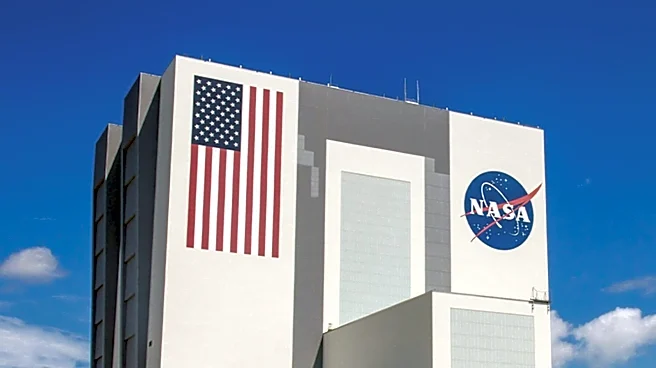
Spelman College in Atlanta has received a grant of almost $400,000 from NASA. This funding is designated to establish a STEM research pipeline for its students and to further investigate the impacts of climate change on plant life within Atlanta. The
project is a collaborative effort involving NASA Marshall Space Flight Center and Stony Brook University. Dr. Jessica Terrien, assistant professor of environmental and health sciences at Spelman, is the principal investigator, working alongside Dr. Guanyu Huang, co-investigator and assistant professor at Stony Brook University, to secure the grant. The initiative, officially titled 'Using TEMPO Satellite Data to Assess Ozone Injury to Plants in Atlanta, Georgia, while Building a Student Research Pipeline at Spelman College,' will utilize NASA data and observations from the Spelman College Ozone Garden to study the relationship between ozone exposure and plant injury.
Why It's Important?
This grant is significant for Spelman College as it aims to create a STEM graduate school pipeline with Stony Brook University, introducing students to career opportunities at NASA and research related to NASA TEMPO satellite data. The project will expand Spelman's capabilities in Earth science education and research, particularly in the utilization of air quality datasets. This expansion will be facilitated through various educational opportunities, including internships, research positions, mentoring, and curriculum integration. For the next two years, professional development opportunities will be available to all Spelman students interested in STEM, along with two application-based student research opportunities: one at Spelman and another at the NASA Marshall Center in Alabama during the summer. This collaboration is crucial for strengthening STEM participation at a Historically Black College and University (HBCU) and establishing a long-term framework for future NASA-related research and student development.
What's Next?
Over the next two years, Spelman College will implement the grant by offering professional development opportunities to STEM-interested students and providing two application-based student research opportunities. One research opportunity will be based at Spelman College, and the other will be at the NASA Marshall Center in Alabama during the summer. The college will continue to integrate air quality datasets into its curriculum and research, fostering a new generation of scientists and researchers. The collaboration with NASA and Stony Brook University is expected to establish a lasting framework for future research and student development, potentially leading to more opportunities for Spelman students in the aerospace and environmental science fields. The project's findings on ozone injury to plants in Atlanta could also inform local environmental policies and urban planning.
Beyond the Headlines
The NASA grant to Spelman College highlights a broader national effort to diversify the STEM workforce and engage underrepresented groups in critical scientific research. By focusing on an HBCU, this initiative addresses historical disparities in STEM education and career pathways for Black women, who are significantly underrepresented in these fields. The project's emphasis on climate change research, specifically ozone injury to plants, connects local environmental concerns in Atlanta with global climate issues, providing students with practical, impactful research experience. This collaboration not only builds a pipeline for graduate studies and careers at NASA but also empowers students to become leaders in addressing environmental challenges, fostering a more inclusive and equitable scientific community. The long-term success of such programs could serve as a model for other institutions seeking to enhance STEM diversity and research capacity.