






What's Happening?
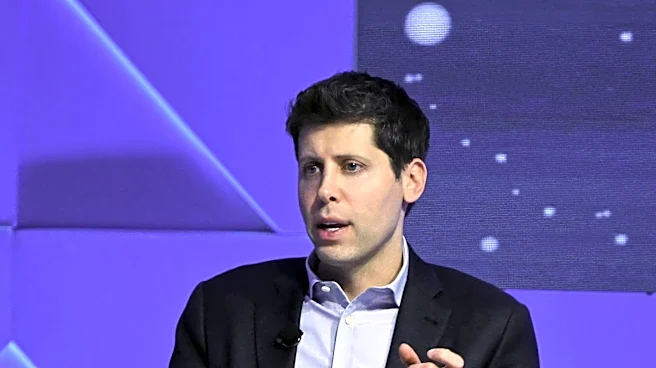
OpenAI CEO Sam Altman has argued that global society must be willing to accept certain negative side effects, such as major hacks, scams, or localized misuse, to unlock the broader economic and technological benefits of artificial intelligence (AI). Speaking
in an interview with Politico’s Decoded newsletter, Altman stated that maintaining broad public access and personal agency over tightly controlled systems outweighs the alternative of zero-risk stagnation. He emphasized that while catastrophic existential threats must be avoided, everyday friction and negative outcomes are inevitable, and the positive societal output will ultimately outweigh the downsides. Altman also indicated that he would reject any regulatory bargain aimed at completely eradicating malicious activities if it meant stifling overall advancement or centralizing control of AI development.
Why It's Important?
Sam Altman's stance highlights a significant philosophical divide within the AI community and among policymakers regarding the balance between innovation and risk mitigation. His argument suggests a pragmatic approach to AI development, acknowledging inherent risks while prioritizing the widespread accessibility and transformative potential of the technology. This perspective is crucial for the U.S. as it navigates the complex landscape of AI regulation and global competitiveness. Accepting a degree of 'bad things happening' could accelerate AI adoption and economic growth, but it also raises concerns about public safety, ethical governance, and the potential for misuse. The debate underscores the challenge for regulators to craft policies that foster innovation without compromising security or societal well-being. This approach could influence how U.S. companies and government agencies invest in, deploy, and regulate AI technologies, potentially shaping the nation's leadership in the global AI race.
What's Next?
The debate surrounding Sam Altman's views is likely to intensify, influencing discussions among policymakers, industry leaders, and civil society groups. This perspective could lead to a re-evaluation of current regulatory proposals, potentially shifting the focus from absolute risk elimination to risk management and resilience. OpenAI's approach, which contrasts with more cautious, slower-paced deployment models advocated by some competitors, will continue to be a subject of scrutiny. Stakeholders will be watching to see if this philosophy translates into specific policy recommendations or industry standards. The ongoing tension between rapid commercial scaling and the mitigation of secondary harms will necessitate continuous dialogue and potentially new collaborative frameworks between tech companies, governments, and international organizations to establish shared safety standards and ethical guidelines for AI development and deployment.
Beyond the Headlines
Altman's argument touches upon a fundamental question: who decides the acceptable level of risk for transformative technologies? By suggesting that society must tolerate certain negatives for AI's benefits, he implicitly places the onus on society to adapt to AI's imperfections rather than solely on developers to perfect it. This raises ethical questions about informed consent, equitable distribution of risks and benefits, and the potential for exacerbating existing societal inequalities if the 'downsides' disproportionately affect vulnerable populations. The discussion also highlights the tension between centralized control, which might offer greater safety but stifle innovation, and decentralized access, which promotes agency but increases potential for misuse. This philosophical divide will likely shape the long-term trajectory of AI governance, influencing not only regulations but also public perception and trust in AI technologies. It calls for a nuanced approach that balances technological progress with robust ethical considerations and societal resilience.