
What's Happening?
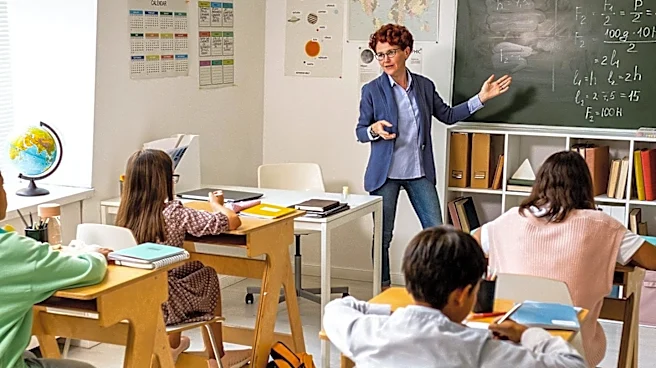
Glen Kitayama, a retired elementary school teacher and Vice-Chair of the Manzanar Committee, is actively involved with Densho in developing educational frameworks to teach Japanese American incarceration
history to elementary students. Kitayama, whose family was impacted by incarceration, stresses the importance of telling the truth about this period of U.S. history and helping students connect it to their own experiences. He advocates for age-appropriate teaching methods, such as using Yoshiko Uchida’s 'The Bracelet' for younger students and integrating discussions about fairness and democracy. Kitayama's work with Densho, an organization he has been connected with since its inception in 1997, focuses on providing resources and guidance for teachers to make this complex history accessible and relevant to young learners.
Why It's Important?
Kitayama's efforts are crucial for ensuring that the history of Japanese American incarceration is not overlooked in elementary education. By making this history accessible to younger students, it fosters a deeper understanding of civil rights, injustice, and the importance of vigilance against prejudice. This initiative helps to educate future generations about the consequences of wartime hysteria and racial discrimination, promoting empathy and critical thinking about historical events. In a diverse society, teaching such histories is vital for building a more inclusive understanding of American identity and for equipping students to recognize and challenge contemporary forms of injustice. His emphasis on connecting historical events to current issues, such as his experience with ICE raids, highlights the enduring relevance of these lessons.
What's Next?
Kitayama will continue his collaboration with Densho to refine and expand the educational framework for elementary teachers. This ongoing work will likely involve creating more resources, lesson plans, and training materials to support educators in teaching this sensitive subject effectively. The focus will remain on providing practical suggestions for teachers to integrate this history into their existing curricula, ensuring it is taught honestly and in a developmentally appropriate manner. Densho's efforts, supported by Kitayama's expertise, aim to empower teachers to address challenging historical narratives and foster a more informed and engaged citizenry.
Beyond the Headlines
This initiative delves into the profound impact of historical memory and its transmission across generations. Kitayama's personal connection to the incarceration underscores the emotional and ethical imperative to confront difficult pasts. His work highlights the power of education not just to impart facts, but to cultivate empathy, critical consciousness, and a sense of civic responsibility in young people. By teaching about the Japanese American incarceration, educators can draw parallels to contemporary issues of discrimination, immigration, and civil liberties, demonstrating that historical lessons are not confined to the past but offer vital insights into present-day challenges. This effort also speaks to the resilience of communities in preserving their stories and advocating for their inclusion in the broader national narrative.