


What's Happening?
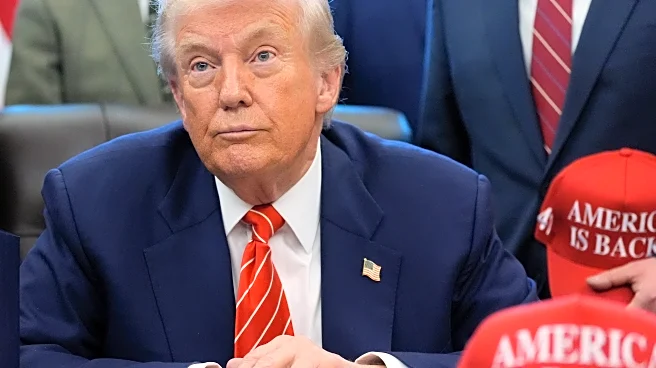
President Donald Trump has reiterated his desire for the United States to acquire Greenland, a move that has been met with strong opposition from Greenland's government and European allies. Trump has suggested that the U.S. could take control of the territory
by force if necessary, citing national security concerns and the strategic importance of Greenland's location in the Arctic. Greenland's government has firmly rejected the idea, stating that it 'cannot accept' a U.S. takeover. European nations, including Denmark, have issued a joint statement reaffirming Greenland's sovereignty and emphasizing that any decisions regarding the territory should be made by Denmark and Greenland alone.
Why It's Important?
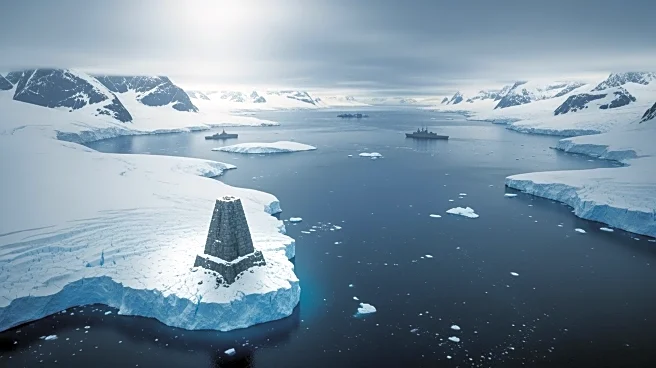
The push for U.S. control over Greenland has significant geopolitical implications, particularly in the context of Arctic security and international relations. Greenland's strategic location and its rich mineral resources make it a valuable asset in the Arctic region, where global powers are vying for influence. Trump's aggressive stance has raised concerns about potential conflicts with NATO allies and the erosion of international norms regarding sovereignty. The situation underscores the complexities of Arctic geopolitics and the challenges of balancing national security interests with diplomatic relations.
What's Next?
The ongoing tensions over Greenland are likely to prompt further discussions within NATO about Arctic security and the role of member states in the region. Greenland's government has indicated its intention to strengthen its defense under NATO's auspices, while European allies continue to push back against U.S. territorial ambitions. The situation may also lead to increased diplomatic efforts to address security concerns in the Arctic and prevent further escalation. The international community will be closely monitoring developments, as any unilateral actions by the U.S. could have far-reaching consequences for global stability and cooperation.