





What's Happening?
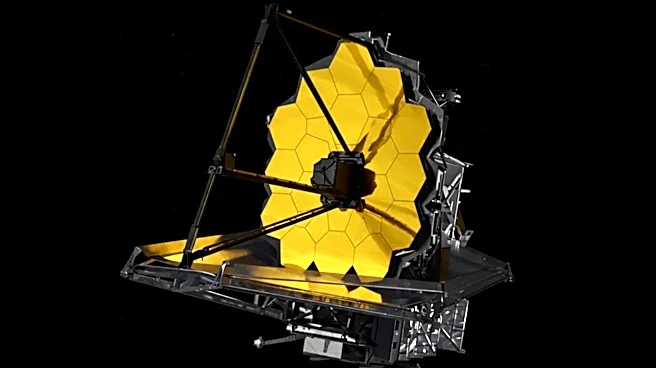
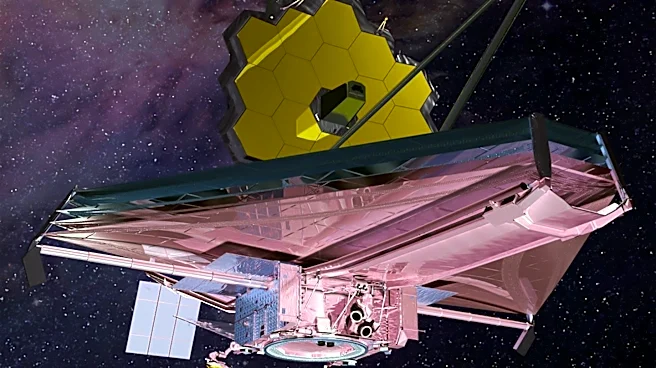
NASA's James Webb Space Telescope has been instrumental in the study of 'little red dots' (LRDs), which are distant, compact red sources in the universe. These LRDs have intrigued astronomers since their discovery in 2022. A recent study led by Pierluigi
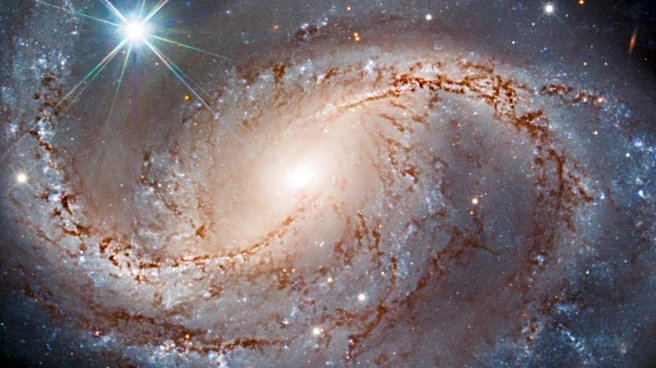
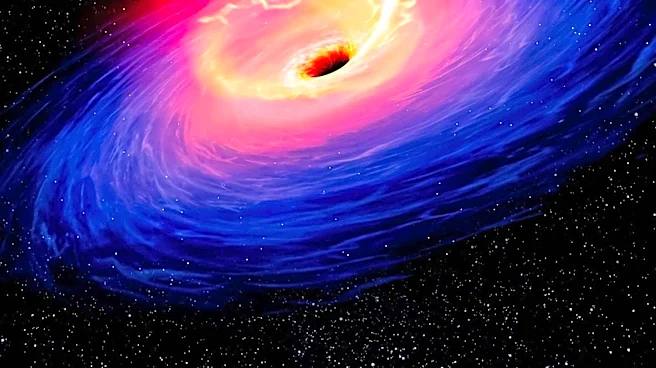
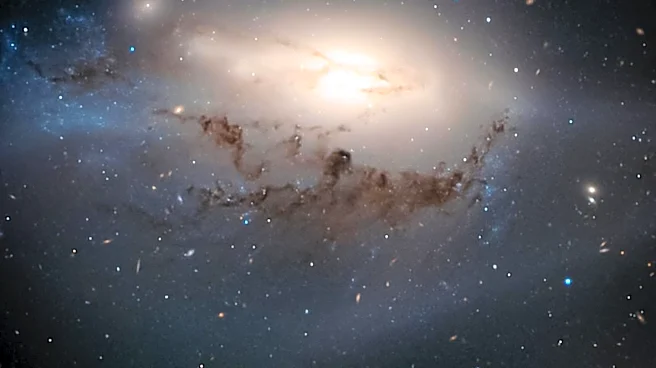
Rinaldi from the University of Arizona's Steward Observatory suggests that these LRDs may not be unique galaxy populations but rather a temporary phase of highly active supermassive black holes. The study, published in The Astrophysical Journal, analyzed a lower-redshift spiral galaxy, nicknamed the 'Saguaro,' to understand the nature of these LRDs. The findings indicate that LRDs are abundant at high redshifts, suggesting they were more common in the early universe. However, their numbers decrease at lower redshifts, raising questions about their evolution as the universe matures.
Why It's Important?
The study of LRDs is significant as it could provide insights into the evolution of galaxies and the role of supermassive black holes in the universe. Understanding these phenomena can help scientists piece together the history of the universe and the formation of its structures. The research also highlights the capabilities of the James Webb Space Telescope in observing distant cosmic events, which could lead to breakthroughs in astrophysics. The findings may influence future studies on galaxy formation and the lifecycle of supermassive black holes, potentially impacting our understanding of the universe's architecture.
What's Next?
Further research is needed to confirm the findings and explore the environments of LRDs at different redshifts. Scientists plan to use the James Webb Space Telescope's archival data to build a census of LRDs and study their environments. This could help determine how these compact red sources evolve over time. Additionally, the study of other Saguaro-like galaxies at lower redshifts could provide more evidence to support the theory that LRDs are a phase of supermassive black holes. These efforts aim to uncover the family tree of LRDs and their role in the cosmic landscape.