
What's Happening?
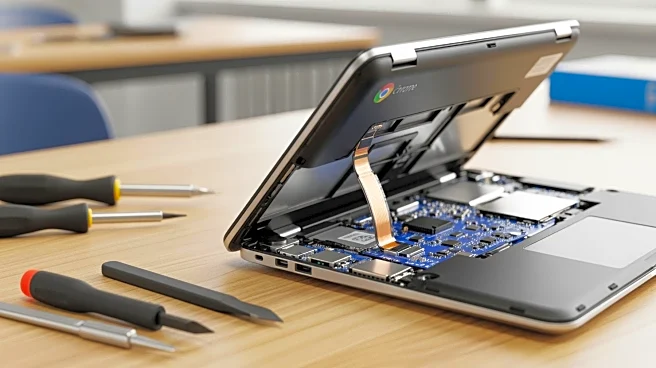
CTL, an ed-tech company, has introduced a new career and technical education (CTE) program aimed at training middle and high school students to become certified Chromebook repair technicians. This initiative,
known as the Chromebook Care Course, provides students with resources such as an adviser toolkit, instructional modules, assessments, and a portfolio template for job interviews. The program is designed to help school districts extend the life cycles of Chromebooks and prepare students for technology roles. The course arrives at a time when districts are facing staffing shortages and the expiration of federal pandemic relief funding, which previously supported 1:1 device initiatives. By training students in device repair, the program aims to address workforce development needs and promote technology sustainability in schools.
Why It's Important?
The introduction of the Chromebook Care Course is significant as it addresses multiple challenges faced by school districts. By empowering students to repair Chromebooks, districts can reduce the total cost of ownership and ensure faster device repair turnarounds, which increases learning uptime. This initiative also supports sustainability by keeping devices in use longer, thereby reducing e-waste. Additionally, the program aligns with workforce development goals by equipping students with valuable technical skills that are in demand. As federal funding for technology initiatives wanes, such programs offer a cost-effective solution for maintaining technology infrastructure in schools.
What's Next?
As districts continue to reassess their technology strategies post-pandemic, programs like the Chromebook Care Course may become more prevalent. Schools might increasingly incorporate student-led tech support roles into their operations, providing practical experience and career pathways for students. This could lead to a broader adoption of similar CTE programs across the country, potentially influencing how educational institutions manage technology and workforce development. Stakeholders, including educators and policymakers, may look to this model as a sustainable approach to integrating technology in education.