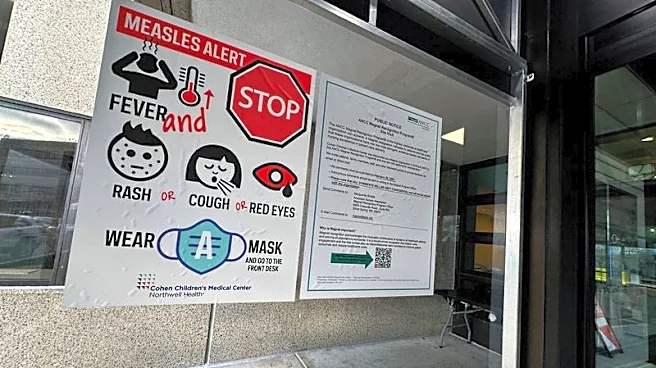






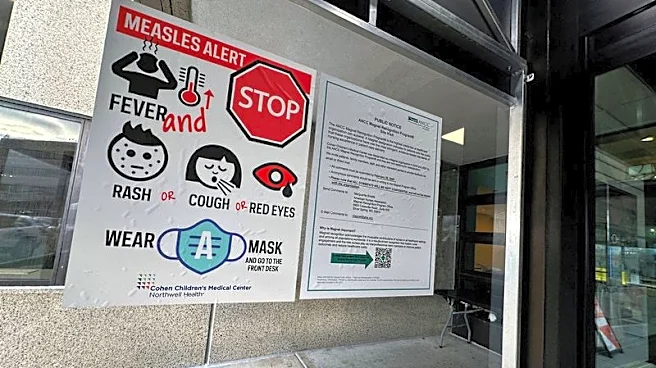
What's Happening?
The United States has officially lost its measles elimination status, a designation it held since 2000. This reversal was announced on November 17 by the Pan American Health Organization’s (PAHO) Measles and Rubella Elimination Regional Monitoring and Re-Verification
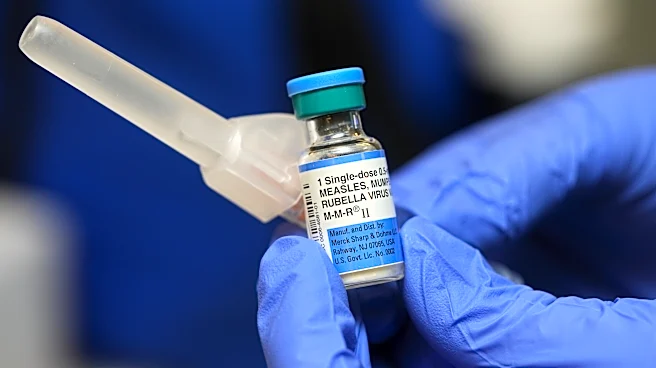
Commission. This development signifies a significant setback for decades of public health efforts aimed at eradicating the highly contagious disease within the U.S. Before the introduction of the measles vaccine, the disease annually sickened over 500,000 people and caused 400 to 500 deaths in the U.S. The Northeast Public Health Collaborative (NEPHC) has reaffirmed its commitment to evidence-based immunization recommendations, including MMR and MMRV vaccines, as advised by the American Academy of Pediatrics and the American Academy of Family Physicians. The NEPHC attributes the decline in vaccination rates to widespread inaccurate information, leading to recent outbreaks and fatalities from a preventable disease.
Why It's Important?
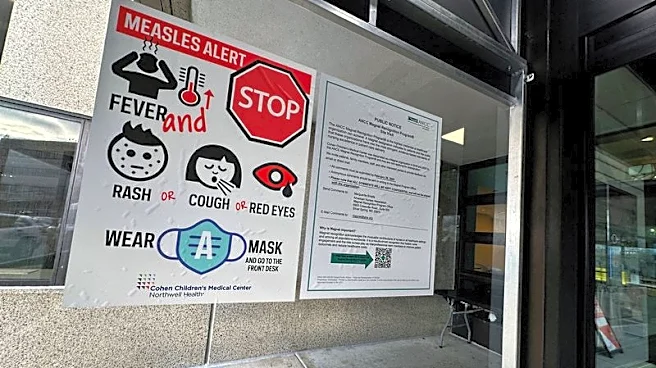
The loss of measles elimination status is a critical public health concern for the United States. Measles is recognized as the most contagious infectious disease known to medical science, with no specific treatment available. Its resurgence poses a direct threat to public health, particularly in areas with low vaccination coverage, where recent outbreaks have predominantly occurred. The disease can lead to severe acute illness, long-term health complications, and even death. This situation highlights the vulnerability of communities when vaccination rates decline, impacting not only vaccinated individuals but also those who cannot receive vaccines, such as infants under six months and immunocompromised individuals. The reversal underscores the importance of public trust in medical science and the dangers of misinformation regarding vaccine efficacy and safety.
What's Next?
The Northeast Public Health Collaborative (NEPHC) is calling upon all government and public health authorities to collaborate on a comprehensive plan to re-achieve measles elimination status for the United States. This will likely involve intensified public awareness campaigns to counter misinformation, efforts to improve vaccine accessibility, and coordinated regional responses to manage outbreaks. Public health agencies will continue to advocate for adherence to recommended vaccination schedules for all eligible individuals. The focus will be on reinforcing evidence-based immunization practices and ensuring that public health policies are guided by scientific consensus. Increased surveillance and rapid response to new cases will also be crucial to prevent further spread and mitigate the impact of the disease.
Beyond the Headlines
The re-emergence of measles in the U.S. extends beyond immediate health concerns, touching upon broader societal and ethical dimensions. It reflects a growing challenge in public health: combating the spread of misinformation and vaccine hesitancy, which have eroded collective immunity. This situation could lead to increased strain on healthcare systems, particularly in regions experiencing outbreaks, and may necessitate a re-evaluation of public health communication strategies. The ethical implications involve the balance between individual autonomy and collective responsibility in public health, especially concerning preventable diseases. Long-term, this development could prompt legislative actions to strengthen vaccination mandates or public health emergency powers, aiming to protect vulnerable populations and restore the nation's health security against vaccine-preventable diseases.