





What's Happening?
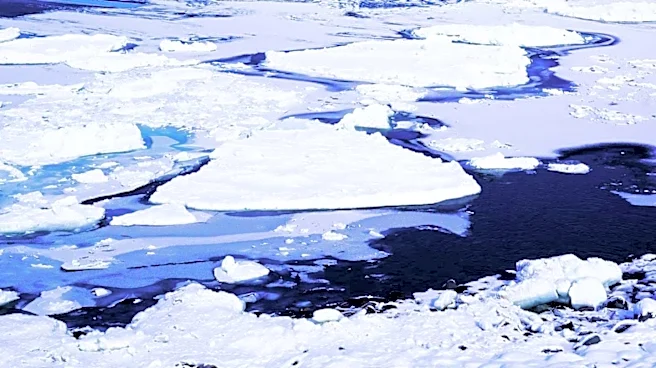
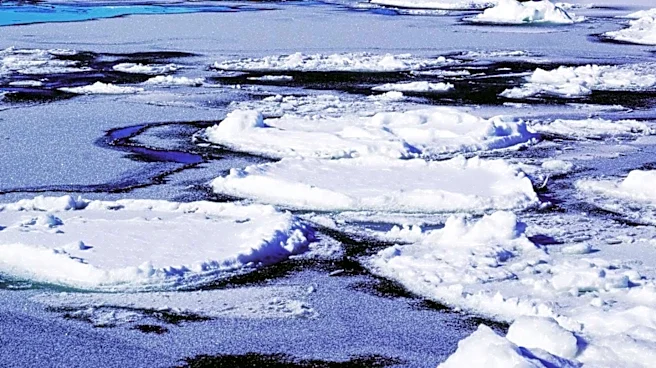
A new modeling study published in *Nature Climate Change* suggests that the East Antarctic Ice Sheet (EAIS) may be more resilient to extreme long-term warming than previously thought. Researchers from the IBS Center for Climate Physics at Pusan National
University in South Korea conducted 100,000-year simulations using a coupled global climate–ice-sheet model. The study found that increased snowfall, greater cloud cover, and shifts in atmospheric circulation could partially offset ice loss, even under very high carbon dioxide concentrations. While the West Antarctic Ice Sheet and Greenland show significant ice loss with sustained warming, the EAIS remains comparatively stable even at warming levels exceeding 10°C in the simulations. This resilience is attributed to atmospheric processes where warmer air carries more moisture towards Antarctica, leading to increased snowfall over the high East Antarctic interior, and greater cloud cover reducing sunlight reaching the ice surface, thereby suppressing melting.
Why It's Important?
This research significantly alters previous understandings of the East Antarctic Ice Sheet's vulnerability to climate change, offering a more nuanced perspective on global sea-level rise projections. The findings suggest that while other ice sheets like West Antarctica and Greenland remain highly susceptible to warming, the EAIS might not contribute as much to long-term sea-level rise as once feared under certain conditions. This has critical implications for coastal communities and infrastructure worldwide, as projections for future sea levels are heavily influenced by the stability of major ice sheets. Understanding these regional differences is vital for policymakers and urban planners in developing adaptation strategies. The study also underscores the complexity of climate feedback loops, where atmospheric changes like increased snowfall and cloud cover can act as mitigating factors against ice loss, highlighting the need for comprehensive, coupled climate-ice-sheet models to accurately predict future climate scenarios.
What's Next?
The study's authors caution that their model has relatively coarse spatial resolution, meaning it cannot fully represent localized processes beneath ice shelves or at individual outlet glaciers. Therefore, the next steps in research will likely involve higher-resolution simulations to determine how these atmospheric stabilizing effects interact with regional ocean-driven melting, which remains a significant factor in ice sheet stability. Further investigations will also focus on refining the understanding of atmospheric circulation changes and their precise impact on moisture transport and cloud formation over Antarctica. These detailed studies will be crucial for validating the current findings and providing more precise long-term projections for the EAIS. The scientific community will continue to integrate these new insights into broader climate models to improve global sea-level rise predictions and inform international climate policy discussions.
Beyond the Headlines
This study delves into the intricate interplay between atmospheric dynamics and cryospheric response, revealing that the future of ice sheets cannot be understood by temperature alone. It highlights the critical role of feedback mechanisms, such as increased snowfall and cloud cover, which can act as natural buffers against warming-induced ice loss. This complexity challenges simpler narratives of climate change impacts and emphasizes the need for sophisticated modeling that accounts for all interacting components of the Earth system. Ethically, these findings provide a glimmer of hope regarding the stability of a major ice sheet, but they do not diminish the urgency of addressing global warming, as other ice sheets remain highly vulnerable. Legally and politically, such research informs international climate agreements and national adaptation strategies, influencing decisions on carbon emission targets and coastal protection measures. Culturally, it reinforces the scientific understanding of Earth's delicate balance and the profound, often unexpected, ways in which its systems respond to human-induced changes.