








What's Happening?
Author and screenwriter Chiara Barzini, known for her book 'Aqua: A Story of Water & Lost Dreams,' recently discussed the profound implications of water scarcity, the historical context of water theft in Los Angeles, and the emerging challenges posed
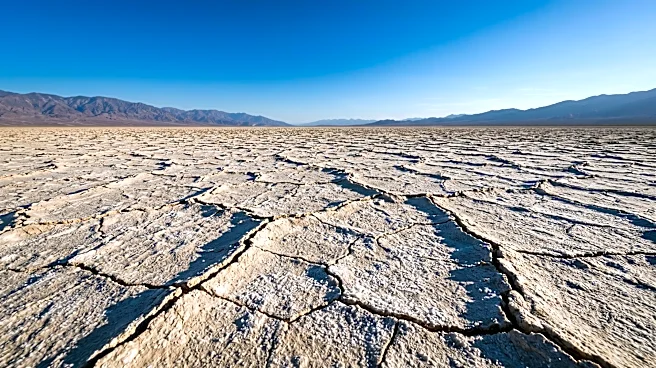
by artificial intelligence. Barzini highlighted how early Hollywood's expansion was facilitated by the diversion of water, creating artificial lakes and lush film sets, often at the expense of natural ecosystems like Owens Lake. She noted that her research for 'Aqua' unexpectedly revealed stories of theft and environmental degradation, particularly when encountering dried-up lakes such as the Salton Sea and Owens Lake. The author also touched upon the increasing awareness of water as a weapon and a critical resource, citing instances like water access issues in Gaza. Furthermore, Barzini expressed concern about the significant water consumption by AI data centers, a topic she began exploring before the recent AI boom, emphasizing that this technology, while offering potential solutions like regenerative agriculture, also presents new demands on water resources. The conversation underscored a growing global recognition of water bankruptcy, where demand outstrips supply, making water a central issue in contemporary discussions.
Why It's Important?
The discussion with Chiara Barzini is important because it sheds light on the critical and often overlooked issue of water management and its historical impact on U.S. urban development, particularly in regions like Los Angeles. The historical account of water theft and diversion for Hollywood's growth illustrates how resource exploitation has shaped American cities and industries, leading to long-term ecological consequences. The concept of 'water bankruptcy' and the increasing use of water as a geopolitical tool have significant implications for national security and public policy, necessitating strategic planning for resource allocation and conservation. Moreover, Barzini's insights into the water demands of artificial intelligence highlight an emerging challenge for the U.S. technology sector. As AI continues to expand, its substantial energy and water requirements could exacerbate existing resource strains, impacting sustainability efforts and potentially leading to regulatory debates. This conversation underscores the interconnectedness of environmental issues, technological advancement, and societal well-being, urging a reevaluation of consumption patterns and resource governance to ensure future stability and growth.
What's Next?
The ongoing dialogue surrounding water scarcity and its intersection with technological advancements, as highlighted by Chiara Barzini, suggests several critical areas for future focus. Policymakers and environmental organizations are likely to intensify efforts to develop sustainable water management strategies, potentially including stricter regulations on industrial water use, particularly for emerging technologies like AI. There may be increased investment in water-efficient technologies and infrastructure to mitigate the impact of growing demand. Public awareness campaigns could also play a larger role in promoting water conservation and educating citizens about the historical and contemporary challenges of water resources. Furthermore, the ethical implications of water allocation, especially in the context of technological development versus basic human needs, are expected to become more prominent in public discourse. The potential for water-related conflicts, both domestically and internationally, may also prompt diplomatic and humanitarian responses. The continued monitoring of ecological sites like the Salton Sea and Owens Lake will be crucial for understanding long-term environmental changes and informing restoration efforts.
Beyond the Headlines
Chiara Barzini's reflections extend beyond immediate policy concerns, delving into the deeper cultural and philosophical dimensions of humanity's relationship with nature and technology. Her exploration of water theft in Los Angeles, particularly its role in shaping the illusionary world of Hollywood, reveals how societal narratives and economic ambitions can obscure environmental realities. This historical context prompts a re-examination of the 'American dream' and its ecological footprint, suggesting that the pursuit of progress has often come at a significant cost to natural resources. The discussion also touches upon the ethical paradox of AI: while it offers potential solutions for environmental challenges like regenerative agriculture, its own resource demands create new dilemmas. This highlights a broader societal struggle to balance innovation with sustainability, raising questions about the true cost of technological advancement. Barzini's personal journey through landscapes of ecological ruin, such as the Salton Sea, underscores a profound sense of loss and the need for a more humble, interconnected approach to the natural world, echoing ancient wisdom about cycles of life and death. This perspective challenges a purely utilitarian view of resources, advocating for a deeper cultural shift towards ecological responsibility and a recognition of nature's intrinsic value.