







What's Happening?
Pakistan's Prime Minister Shehbaz Sharif has directed federal health officials and polio eradication teams to develop a coordinated strategy within a week to combat the rising number of polio cases. This directive follows the report of the ninth wild
poliovirus case of 2026, detected in a seven-month-old boy from Khyber district in Khyber-Pakhtunkhwa (K-P). Seven of the nine cases this year have been reported from K-P, with the remaining two from Sindh. The Pakistan Polio Eradication Initiative (PEI) has linked the cases in Khyber district to poliovirus strains circulating in Afghanistan, highlighting cross-border transmission as a significant factor. The Prime Minister expressed concern over the latest infections and called for a more effective strategy and intensified efforts to contain the virus, emphasizing that the government cannot afford to lose momentum in its campaign against the crippling disease.
Why It's Important?
The resurgence of polio in Pakistan, one of the last countries where the disease remains endemic, poses a critical threat to global polio eradication efforts. The cross-border transmission from Afghanistan underscores the need for robust international cooperation and synchronized vaccination campaigns to prevent the virus from spreading further. For the U.S. and other polio-free nations, the continued circulation of the virus in any part of the world necessitates ongoing surveillance and vaccination programs to prevent reintroduction. The Prime Minister's urgent call for a coordinated plan reflects the gravity of the situation, as failure to eradicate polio could lead to significant public health challenges and economic burdens globally, including the potential for costly containment measures in countries that have already eliminated the disease.
What's Next?
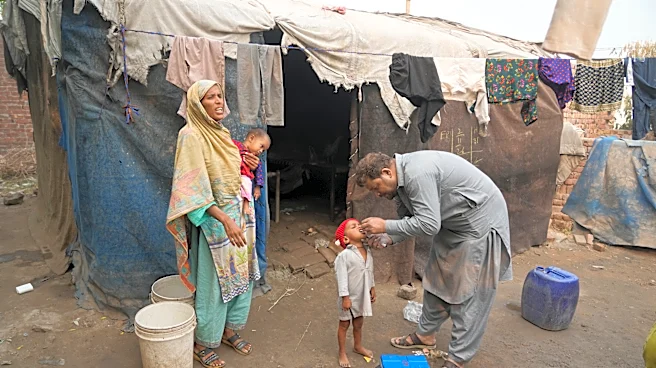
Prime Minister Sharif has instructed federal health minister, minister of state, secretary for national health, and members of the polio eradication team to immediately visit all four provinces and consult with their respective chief ministers and chief secretaries. The goal is to prepare a unified action plan within a week, emphasizing a collaborative approach involving the federation, provinces, and other stakeholders. The government also plans to prioritize ensuring uninterrupted access for frontline polio workers and strengthening their security, particularly in areas with security concerns. Efforts will also focus on improving routine immunization coverage nationwide, with special attention to polio-affected and high-risk regions. A nationwide door-to-door vaccination campaign is currently underway, targeting nearly 24 million children.
Beyond the Headlines
The challenges faced by Pakistan in eradicating polio extend beyond medical interventions, touching upon issues of governance, security, and public trust. The Prime Minister's emphasis on a unified approach highlights the need for political will and inter-provincial coordination to overcome resistance and ensure vaccine delivery. The ongoing security threats to polio workers underscore the complex socio-political environment in which public health initiatives operate. Successfully addressing these challenges requires not only effective vaccination strategies but also comprehensive community engagement, addressing misinformation, and ensuring the safety of health workers. The global community's support remains vital for Pakistan to achieve its goal of a polio-free future, demonstrating the interconnectedness of global health security.