








What's Happening?
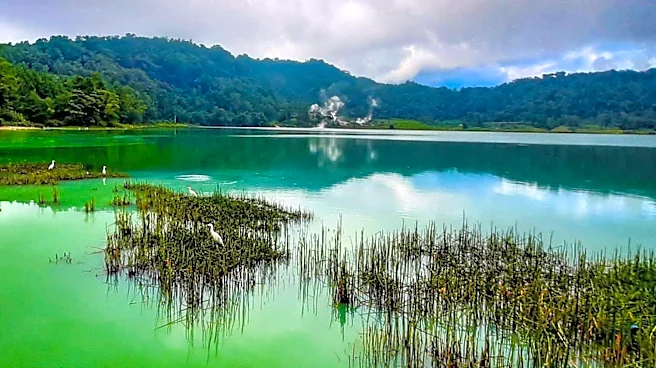
Health officials in Canandaigua, New York, have issued warnings about harmful algal blooms appearing on Canandaigua Lake and other Finger Lakes. These blooms, characterized by a green, paint-like film on the water's surface, pose health risks to both
humans and pets. The presence of blue-green algae has led to the temporary closure of Kershaw Beach. Ontario County Public Health Director Kate Ott advises residents to avoid affected areas, as the algae can cause rashes and other health issues, particularly if ingested by children or pets. The Canandaigua Lake Watershed Association has reported 19 blooms since the start of their monitoring program two weeks ago. The blooms are more frequent on the lake's east side due to wind patterns. Officials urge the public to reduce the use of fertilizers and pesticides to help maintain water quality.
Why It's Important?
The occurrence of harmful algal blooms in the Finger Lakes region is significant due to its potential impact on public health and local tourism. The blooms can deter recreational activities such as swimming and boating, which are vital to the area's economy. Additionally, the health risks associated with these blooms, including skin irritation and illness from ingestion, pose a threat to residents and visitors. The situation underscores the importance of environmental stewardship and the need for community involvement in reducing pollutants that contribute to water quality degradation. The blooms also highlight the broader issue of climate change, as warmer temperatures can exacerbate the frequency and intensity of such environmental phenomena.
What's Next?
Residents are encouraged to report sightings of harmful algal blooms to the Canandaigua Lake Watershed Association. Efforts to monitor and manage the blooms will continue, with a focus on public education about reducing environmental pollutants. Local authorities may implement additional measures to protect public health and preserve the lake's ecosystem. The situation may prompt further discussions on environmental policies and regulations aimed at mitigating the impact of climate change on local water bodies.