






What's Happening?
Russia has launched the Progress 95 cargo spacecraft, carrying nearly three tons of essential supplies to the International Space Station (ISS). The launch took place from the Baikonur Cosmodrome in Kazakhstan, with the spacecraft scheduled to dock with the ISS on April
27. The cargo includes food, fuel, and mission-critical equipment necessary for the astronauts aboard the ISS. This mission highlights the ongoing international collaboration in space exploration, despite geopolitical tensions on Earth. The Progress 95 mission is part of a continuous cycle of supply missions that ensure the operational capability of the ISS.
Why It's Important?
The successful delivery of supplies to the ISS is crucial for maintaining the station's operations and supporting scientific research in microgravity. These missions are vital for the sustainability of human presence in space, enabling experiments that can lead to advancements in various fields such as biology and materials science. The collaboration between different countries in maintaining the ISS demonstrates the importance of international partnerships in space exploration, which can transcend political differences and contribute to global scientific progress.
What's Next?
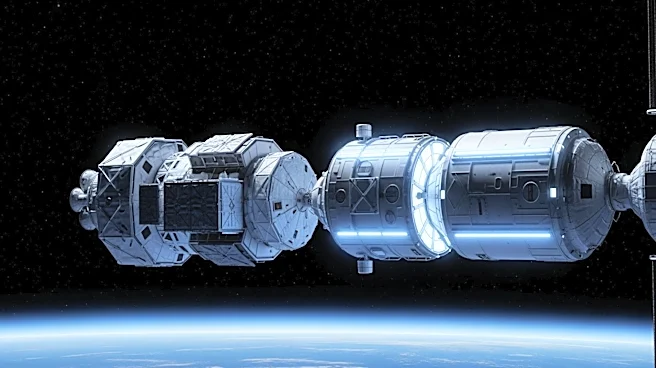
Following the docking of Progress 95, the supplies will be unloaded to support ongoing research and maintenance activities on the ISS. The spacecraft will remain docked for several months before being filled with waste and deorbited. Future resupply missions from various countries, including Japan and the United States, will continue to support the ISS. The ongoing collaboration in space logistics is expected to evolve with advancements in reusable spacecraft technology, potentially reducing costs and increasing the efficiency of supply missions.