







What's Happening?
Researchers at the Institute of Science and Technology Austria (ISTA) have uncovered a significant evolutionary development in cyanobacteria, organisms known for their role in oxygenating Earth's atmosphere. The study, published in Science, reveals that
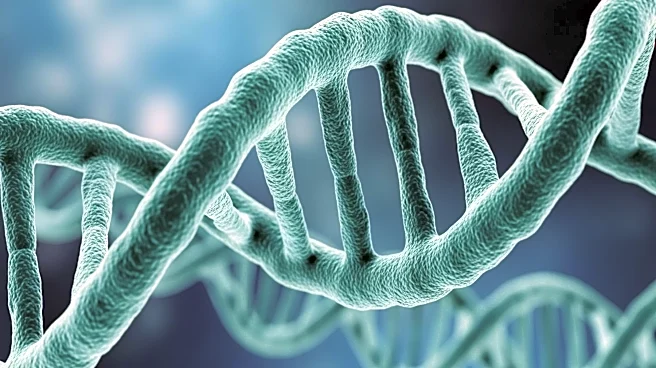
a DNA segregation system in these bacteria has evolved into a structure that determines cell shape. This discovery was made by Benjamin Springstein and his team, who found that the system, originally used for DNA separation during cell division, now functions like a cytoskeleton, shaping the cells of Anabaena, a model multicellular cyanobacterium. This adaptation highlights the evolutionary flexibility of protein systems in these ecologically vital organisms.
Why It's Important?
The findings provide crucial insights into the evolutionary processes that have allowed cyanobacteria to adapt and thrive in diverse environments. By understanding how these organisms have repurposed ancient biological systems, scientists can gain a better grasp of the mechanisms behind multicellular life development. This knowledge is particularly relevant as cyanobacteria play a significant role in global carbon and nitrogen cycles, impacting ecological balance and climate regulation. The study also underscores the potential for discovering new biological functions in other organisms, which could have implications for biotechnology and synthetic biology.
What's Next?
Future research will likely focus on exploring the broader implications of this evolutionary shift in cyanobacteria. Scientists may investigate how similar systems have evolved in other bacterial species and the potential applications of these findings in biotechnology. Additionally, understanding the mechanisms behind this adaptation could lead to advancements in synthetic biology, where engineered organisms are designed for specific functions. The study opens new avenues for research into the evolutionary history of multicellular life and the potential for harnessing these systems for human benefit.
Beyond the Headlines
This discovery highlights the dynamic nature of evolutionary processes, where biological systems can be repurposed for entirely new functions. It raises questions about the potential for other ancient systems to have undergone similar transformations, offering a deeper understanding of life's complexity. The study also emphasizes the importance of basic scientific research in uncovering unexpected findings that can lead to significant advancements in various fields, including ecology, biotechnology, and evolutionary biology.