


What's Happening?
The Great Salt Lake in Utah is at risk of reaching historic low water levels by fall 2026, despite recent heavy snowfall. According to Grow the Flow, a conservation group, the snowpack in Utah remains critically low, with the U.S. Department of Agriculture’s
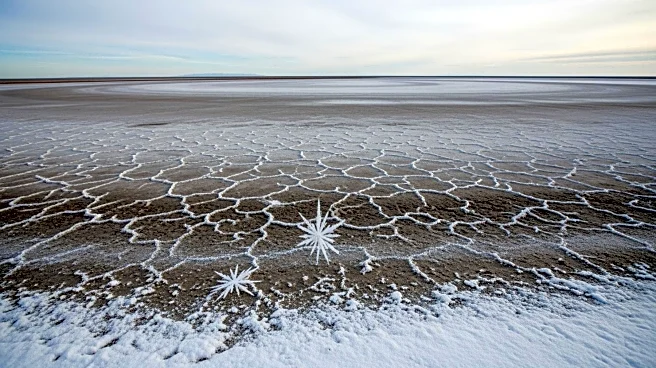
Natural Resources Conservation Service reporting only a 10% chance of reaching normal snowpack levels this year. Samantha Hawkins, a spokesperson for Grow the Flow, emphasized the need for sustained snowpack into spring to ensure adequate runoff to replenish the lake. The current situation is exacerbated by months of precipitation falling as rain rather than snow, leaving the lake less than 36% full and exposing over 1,100 square miles of lakebed.
Why It's Important?
The potential decline in the Great Salt Lake's water levels poses significant environmental and health risks. The exposed lakebed contains toxic dust and heavy metals, which can worsen air quality and lead to severe health issues such as heart attacks and respiratory diseases. A study by Brigham Young University highlighted that air pollution in Utah could cause thousands of premature deaths annually. The situation underscores the urgency for legislative action to address water management and conservation efforts. The 2026 legislative session is seen as a critical opportunity to implement measures to restore the lake by 2034.
What's Next?
Efforts to address the declining water levels of the Great Salt Lake will likely focus on legislative actions to improve water management and conservation. Stakeholders, including environmental groups and policymakers, may push for initiatives to increase water flow to the lake and reduce barriers to conservation. The outcome of these efforts will be crucial in determining the long-term health of the lake and the surrounding environment.
Beyond the Headlines
The situation with the Great Salt Lake highlights broader environmental challenges related to climate change and water resource management. The reliance on snowpack for water supply in arid regions like Utah underscores the vulnerability of these ecosystems to changing precipitation patterns. Long-term solutions may require innovative approaches to water conservation and management, as well as increased public awareness and engagement in environmental issues.