



What's Happening?
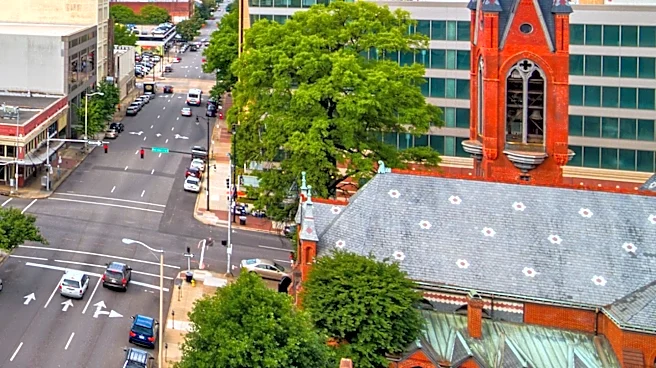
Orlando's Church Street is currently undergoing significant roadway improvements as part of a city initiative to revitalize its downtown entertainment district. The construction, which began over the summer, spans from Garland Street to the railroad tracks.
The project aims to transform the area into a more pedestrian-friendly environment, featuring two 11-foot travel lanes and dedicated pedestrian walkways designed to foster a festival-like atmosphere. Residents like Claudette Zamor, who has lived in Orlando for 27 years, recall a time when Church Street was a bustling hub for nightlife and entertainment, a vibrancy she feels has diminished over the years. While construction has occupied much of the roadway, new landscaping is already visible, indicating progress. The city plans to extend these improvements to Orange Avenue in a second phase, with the entire project anticipated to conclude by summer 2028.
Why It's Important?
This revitalization project is important for Orlando's urban development and local economy. By making Church Street more pedestrian-friendly, the city aims to attract more visitors and residents, potentially boosting local businesses, restaurants, and entertainment venues. A more vibrant and accessible downtown area can enhance Orlando's appeal as a tourist destination and improve the quality of life for its residents. The focus on creating a 'festival-like atmosphere' suggests an effort to re-establish Church Street as a central gathering place, which could lead to increased foot traffic and economic activity. The success of this project could serve as a model for other urban revitalization efforts in the U.S., demonstrating how infrastructure improvements can breathe new life into city centers and foster community engagement.
What's Next?
Following the completion of the initial phase of roadway improvements from Garland Street to the railroad tracks, the city of Orlando will proceed with the second phase of the project. This subsequent phase will concentrate on Orange Avenue, with the primary goal of further enhancing pedestrian accessibility and creating a more welcoming environment for foot traffic. The overall project is slated for completion by summer 2028. As construction progresses, local businesses and residents will likely continue to adapt to the changes, with the expectation that the completed improvements will draw more people to the area. The city will monitor the impact of these changes on local commerce and community engagement, aiming to restore Church Street to its former status as a vibrant entertainment destination.
Beyond the Headlines
The revitalization of Church Street reflects a broader trend in urban planning across the U.S. where cities are increasingly prioritizing pedestrian-friendly infrastructure and public spaces. This shift acknowledges the economic and social benefits of walkable urban environments, which can foster community interaction, support local businesses, and reduce reliance on vehicular traffic. The project also highlights the challenge of balancing historical charm with modern urban development, as residents like Claudette Zamor express a desire to recapture the 'banging' atmosphere of the past while embracing new improvements. The long-term success of such initiatives often depends on sustained community engagement and the ability to create spaces that are both functional and culturally resonant, ensuring that the revitalized area serves the needs and desires of both long-time residents and new visitors.