




What's Happening?
Astronomy enthusiasts are observing Comet C/2024 E1 (Wierzchoś) as it fades while passing through Taurus. The comet, which rounded the Sun in January, is now retreating into the solar system's depths. Meanwhile, Jupiter is visible in the evening sky,
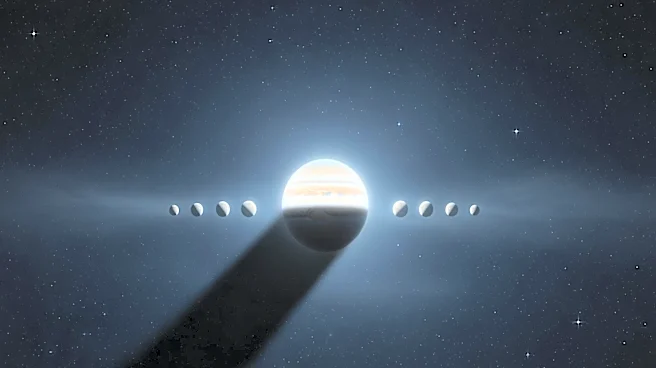
offering a shadow transit of its moon Callisto. Observers in the eastern U.S. can witness the transit beginning at 9:14 P.M. EDT, with the shadow crossing Jupiter's cloud tops. The event lasts over four hours, allowing viewers across the U.S. to observe the phenomenon.
Why It's Important?
These celestial events provide valuable opportunities for amateur astronomers and enthusiasts to engage with the night sky. Observing comets and planetary transits enhances understanding of the solar system's dynamics and encourages public interest in astronomy. Such events can inspire educational initiatives and community gatherings, fostering a broader appreciation for science and space exploration. The visibility of these phenomena across the U.S. underscores the accessibility of astronomy as a hobby and educational tool.
What's Next?
As Comet Wierzchoś continues to fade, observers may shift focus to other celestial events, such as the brightening Comet C/2025 R3 (PanSTARRS). Jupiter's shadow transits will continue to offer viewing opportunities, with Ganymede's shadow crossing the planet later in the week. These events may prompt increased telescope sales and interest in astronomy clubs, as enthusiasts seek to capture these fleeting moments. The ongoing observation of celestial bodies contributes to scientific research and public engagement with space exploration.