






What's Happening?
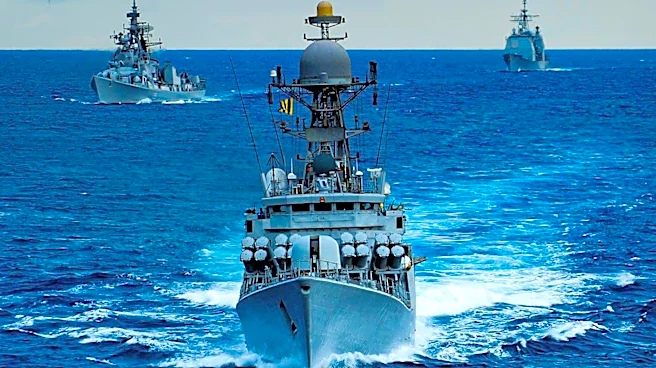
President Trump, Secretary of Defense Pete Hegseth, and Secretary of the Navy John C. Phelan announced plans to construct a new class of American-designed battleships, starting with the USS Defiant. These proposed vessels are described as the most lethal
surface combatants ever constructed, with technical specifications indicating they will displace over 35,000 tons, more than double the size of the Zumwalt-class destroyers. The ships are intended to be armed with cruise missiles, 5-inch guns, rail guns, and potentially advanced systems like directed energy weapons. The Congressional Budget Office (CBO) estimates the total cost of this nuclear-powered battleship program to be approximately $275 billion (in 2026 dollars) over the 2027–2056 period, with the first ship costing around $23 billion. The CBO also noted that constructing such large combatant vessels could pose a challenge for the shipbuilding industry.
Why It's Important?
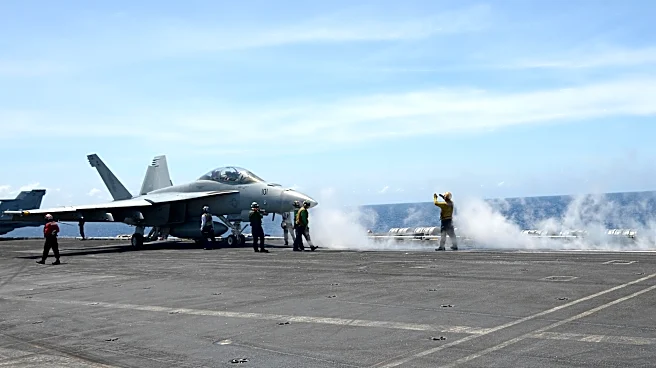
President Trump's ambitious plan for a new class of battleships carries significant implications for U.S. defense spending, naval strategy, and industrial capacity. The estimated $275 billion cost adds substantially to the already burgeoning national debt, raising questions about fiscal responsibility and resource allocation. Furthermore, the proposal comes at a time when military strategists are debating the relevance and vulnerability of large surface combatants in modern warfare. Experts like Harry J. Kazianis suggest that such vessels are increasingly susceptible to relatively cheap modern weapons, including satellites, long-range missiles, aerial drones, and explosive unmanned boats. This raises concerns that these expensive new battleships could become 'drone sponges,' potentially leading to inefficient defense investments. The plan also includes reverting to older steam catapult technology on aircraft carriers, which could incur billions in additional costs and operational challenges for the Navy's most advanced ships.
What's Next?
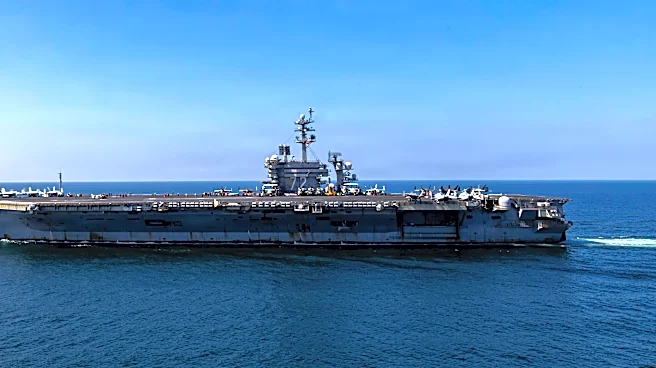
The proposed new battleship program will likely face intense scrutiny from Congress, defense analysts, and the public due to its high cost and questions about its strategic utility. The Congressional Budget Office's cost estimates will be a central point of discussion in future budget debates. The U.S. Navy will need to address concerns regarding the vulnerability of large surface vessels to modern asymmetric threats and justify the significant investment in this new class of ships. The plan to revert to steam catapults on aircraft carriers will also require detailed justification, particularly given the design challenges and cost implications for existing advanced carriers. The shipbuilding industry will need to demonstrate its capacity to handle the construction of such massive and complex vessels. Ultimately, the future of this program will depend on ongoing political will, evolving geopolitical considerations, and a thorough assessment of its strategic and financial viability.
Beyond the Headlines
The debate surrounding President Trump's proposed battleships extends beyond mere military hardware to touch upon fundamental shifts in global power dynamics and the future of naval warfare. The concept of large, expensive surface combatants is being challenged by the proliferation of advanced, low-cost weaponry, suggesting a potential paradigm shift from traditional naval dominance to more distributed and asymmetric warfare strategies. This raises ethical questions about the allocation of vast sums of taxpayer money to systems that may quickly become obsolete or overly vulnerable. Furthermore, the discussion about the U.S. role as a 'global ocean cop' and its potential disengagement from maintaining freedom of navigation for the entire planet highlights a broader re-evaluation of American foreign policy and military commitments. The decision to invest in these battleships could signify a commitment to traditional power projection or a miscalculation in adapting to the evolving nature of international conflict.