



What's Happening?
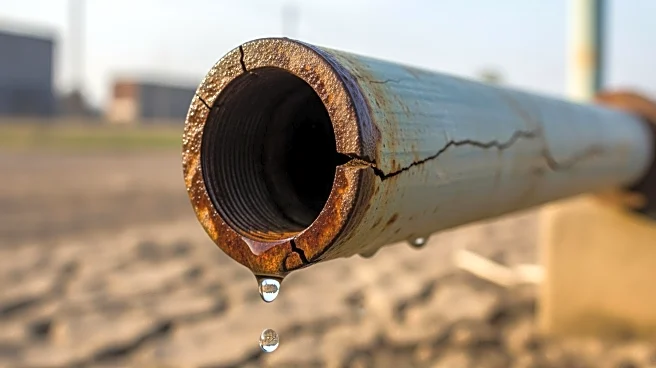
Dixmoor, a village in Illinois, is grappling with frequent water line breaks, underscoring significant infrastructure challenges. Recently, four major water main breaks occurred over two weekends, affecting nearly 1,000 residents. These incidents are
part of a long-standing issue attributed to aging infrastructure, which village officials first acknowledged in 2019. The village has been working on various projects to address these issues, including a significant project completed in 2024 with funding from the U.S. Army Corps of Engineers. Despite these efforts, the village still requires substantial funding, estimated between $50 million and $60 million, to fully resolve the water line problems. Residents have expressed frustration over communication gaps with village officials during these incidents.
Why It's Important?
The recurring water line breaks in Dixmoor highlight a broader issue of aging infrastructure in many U.S. communities, particularly in low-income areas. These breaks not only disrupt daily life but also pose health risks due to potential water contamination. The situation in Dixmoor reflects a national challenge where infrastructure repair costs often exceed available resources, leading to a cycle of temporary fixes rather than long-term solutions. This issue is compounded by financial constraints, as seen in the broader Chicago south suburbs, where water debt and disputes over payments further complicate infrastructure improvements. Addressing these challenges is crucial for ensuring reliable access to clean water, a fundamental necessity for public health and quality of life.
What's Next?
Dixmoor plans to continue its efforts to secure funding for infrastructure improvements. The village has already received over $18 million in county, state, and federal funding since 2022, which has been used for various projects, including the rehabilitation of storage reservoirs and the installation of an emergency generator. Future plans include completing ongoing projects and identifying additional funding sources to address the remaining infrastructure needs. Residents are expected to advocate for better communication and transparency from village officials regarding water quality and infrastructure issues. The village's experience may serve as a case study for other communities facing similar challenges, emphasizing the need for comprehensive infrastructure planning and investment.