








What's Happening?
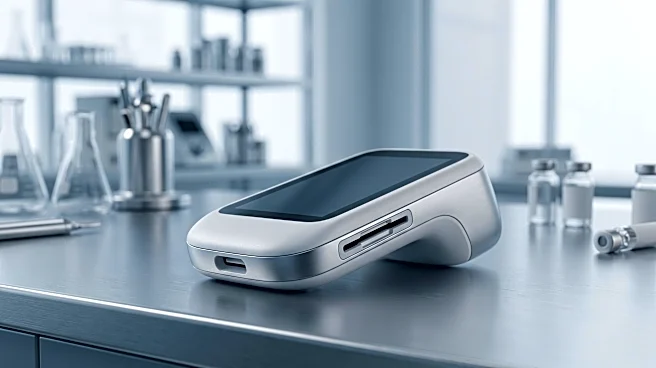
CRISPR-based handheld assays are emerging as a significant development in the field of tuberculosis (TB) diagnostics. These assays utilize CRISPR technology to identify TB pathogens directly from patient samples, offering rapid and accurate results. The integration
of CRISPR with handheld devices is a key focus, aiming to facilitate early diagnosis and drug resistance profiling. This advancement is particularly crucial for effective TB management and control, especially in point-of-care settings. The latest data indicates ongoing development to enable simultaneous detection capabilities, which would further enhance their utility across various clinical environments. These molecular diagnostics are designed to provide insights into drug resistance, a critical aspect of treating infectious diseases.
Why It's Important?
The development of CRISPR-based handheld assays for TB diagnostics holds substantial importance for public health, particularly in the U.S. and globally. Rapid and accurate diagnosis of TB, including the identification of drug-resistant strains, is vital for preventing further transmission and ensuring effective treatment. In the U.S., while TB incidence is lower than in some other regions, the emergence of drug-resistant forms poses a significant challenge to healthcare systems. These portable diagnostic tools could enable quicker intervention, reduce the spread of the disease, and improve patient outcomes, especially in underserved or remote areas where access to centralized laboratories is limited. The ability to profile drug resistance at the point of care could also inform more targeted treatment strategies, potentially reducing healthcare costs and the burden on the healthcare infrastructure.
What's Next?
The next steps for CRISPR-based handheld TB assays involve continued clinical validation, addressing cost-effectiveness, and ensuring scalability and equitable access. Researchers are working to refine these technologies to achieve near laboratory-quality accuracy within clinically relevant timeframes, typically under 30 minutes. The integration of artificial intelligence (AI) and cloud-based digital health systems is also being explored to support automated interpretation, real-time surveillance, and antimicrobial stewardship. This convergence of molecular diagnostics, nanotechnology, and AI-powered analytics is expected to lead to transformative opportunities in precision therapy, antimicrobial resistance surveillance, and infectious disease preparedness. Overcoming barriers such as regulatory approval and widespread adoption will be crucial for these assays to reach their full potential in clinical practice.
Beyond the Headlines
Beyond the immediate benefits of rapid TB diagnosis, the advancement of CRISPR-based handheld assays signifies a broader shift in diagnostic medicine. This technology represents a move towards decentralized, accessible, and highly specific diagnostic tools that could revolutionize how infectious diseases are managed. The ethical implications of widespread, rapid diagnostic capabilities, such as data privacy and the potential for misuse, will need careful consideration. Furthermore, the success of these assays could pave the way for similar CRISPR-based diagnostics for other neglected infectious diseases and emerging pathogens, fundamentally altering global health strategies. The long-term impact could include a reduction in diagnostic disparities, improved public health surveillance, and a more proactive approach to controlling infectious disease outbreaks.