







What's Happening?
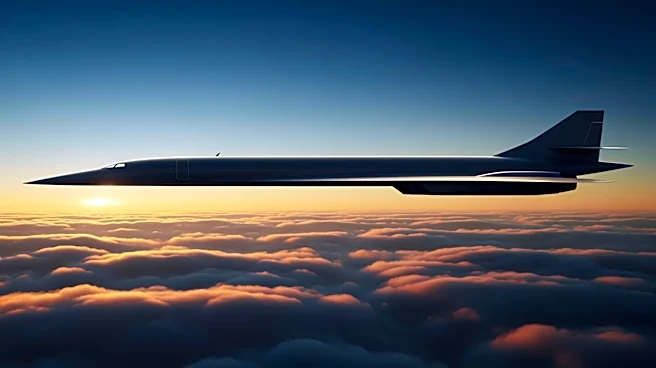
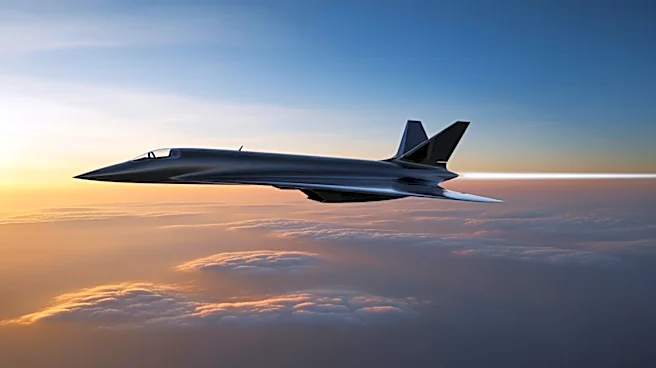
NASA's X-59, an experimental supersonic aircraft, successfully completed its first supersonic flight on June 5, 2026. The aircraft, part of NASA's Quesst mission, reached a speed of Mach 1.1 and an altitude of 43,400 feet during an 81-minute flight from
Edwards Air Force Base in California. This milestone marks a significant step in demonstrating the aircraft's low-boom supersonic technology, which aims to reduce the noise impact of supersonic travel. The X-59 is designed to produce a quiet 'thump' instead of a loud sonic boom, potentially enabling commercial supersonic flights over land. The flight was monitored by a NASA F-15 chase plane, which obscured any sound from the X-59. The next phase of testing will focus on the aircraft's sound profile to verify its quiet supersonic capabilities.
Why It's Important?
The successful supersonic flight of the X-59 is crucial for the future of commercial supersonic travel. By demonstrating the feasibility of quiet supersonic flight, NASA aims to influence regulatory standards and pave the way for a new market in supersonic airliners. This could significantly reduce travel times for passengers, making long-distance travel more efficient. The technology developed through the Quesst mission will provide U.S. aircraft manufacturers with the tools to design supersonic airliners that meet noise requirements, potentially giving them a competitive edge in the global aviation market. The data collected from these tests will be shared with international regulators to help establish new noise standards.
What's Next?
The X-59 will continue its testing phase, focusing on its sound profile to ensure it meets the quiet supersonic flight requirements. The aircraft is expected to conduct its first 'mission conditions' flight soon, reaching a speed of Mach 1.4 and an altitude of 55,000 feet. This phase will involve flying over several U.S. communities to gather data on public perception of the aircraft's noise. The results will be crucial for developing new noise standards and advancing the commercial viability of supersonic flights over land. NASA's collaboration with Lockheed Martin Skunk Works and other partners will continue to refine the technology and expand the X-plane portfolio.