



What's Happening?
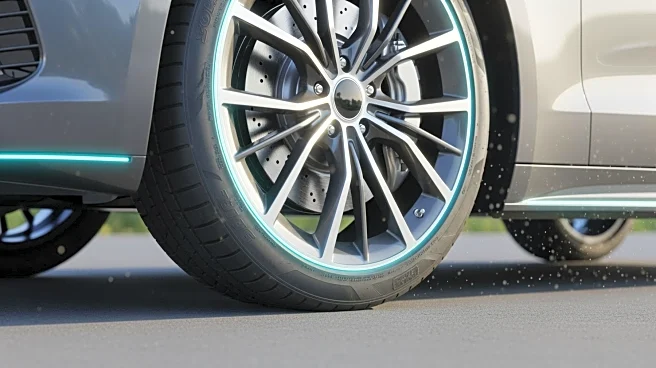
A new report by Ricardo, commissioned by the UK Department of Transport, reveals that electric vehicles (EVs) can significantly reduce PM2.5 emissions from brake and tyre wear. Despite being heavier than traditional vehicles, EVs equipped with regenerative
braking technology emit fewer particulates. The study emphasizes the importance of using low-dust brake pads and advanced braking systems to mitigate non-exhaust emissions, which are now a major source of air pollution. The findings suggest that simple technological interventions can have substantial public health benefits.
Why It's Important?
The report's findings are crucial as they address a growing concern about non-exhaust emissions, which have become a dominant source of pollution from vehicles. By highlighting effective mitigation strategies, the study provides a pathway for reducing air pollution and its associated health risks, such as asthma and premature death. This research supports the transition to cleaner transportation technologies and could influence policy decisions and industry practices aimed at improving air quality.
What's Next?
The report recommends further research into particle reduction devices and encourages the adoption of regenerative braking technologies in areas with critical air quality concerns. Policymakers and automotive manufacturers may use these findings to develop regulations and design innovations that prioritize public health. The study could also lead to increased consumer awareness and demand for vehicles with advanced emission-reducing technologies.