



What's Happening?
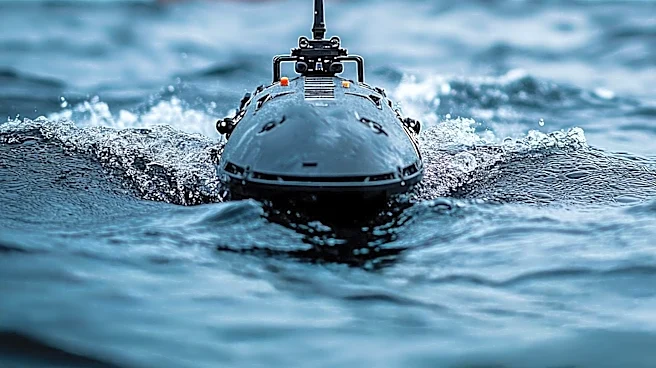
During the 35th Independence Day Military Parade in Ashgabat, Turkmenistan's State Border Service and National Navy publicly showcased Israel Aerospace Industries (IAI) Katana Unmanned Surface Vessels (USVs) and their accompanying KATA:NA PLUS mobile
remote control station. These USVs, developed by IAI’s Systems, Missiles & Space Group, are designed to enhance Turkmenistan's maritime domain awareness, protect its exclusive economic zone (EEZ), and provide anti-surface warfare (ASuW) capabilities across the Caspian Sea basin. The Katana USV features a modular, dual-mode hull, allowing for fully autonomous operation, real-time remote control via line-of-sight (LOS) or SATCOM, or manned operation as a fast patrol boat. It is equipped with advanced collision-avoidance algorithms, a stabilized electro-optical/infrared (EO/IR) sensor suite, surface search radar, and a remote weapon station (RWS). Powered by twin 560 HP marine diesel engines, the 6.5-ton vessel can reach speeds up to 60 knots, enabling rapid response against maritime threats, intrusions into critical oil/gas infrastructure, and territorial water incursions.
Why It's Important?
The introduction of the IAI Katana USVs into Turkmenistan's naval forces signifies a significant upgrade in the country's maritime defense capabilities, particularly in the Caspian Sea. This development enhances Turkmenistan's ability to monitor and protect its vital energy infrastructure, such as oil and gas platforms, and secure its territorial waters against various threats. For Israel Aerospace Industries, this deployment underscores its position as a key provider of advanced defense technology to international partners, demonstrating the effectiveness and versatility of its unmanned systems. The Katana's multi-role capabilities, including EEZ patrol, critical infrastructure defense, and anti-surface warfare, provide Turkmenistan with a robust solution for maintaining regional stability and safeguarding its economic interests in a strategically important body of water. The adoption of such sophisticated unmanned systems by a Central Asian nation also highlights a broader trend in global defense, where countries are increasingly investing in autonomous technologies to enhance their security postures.
What's Next?
The deployment of the Katana USVs is expected to lead to increased maritime surveillance and enforcement activities by Turkmenistan in the Caspian Sea. This could include more frequent patrols to deter illegal activities, enhanced protection of offshore energy assets, and improved response times to potential maritime threats. The integration of these advanced systems will likely necessitate further training and operational development for the Turkmen Navy and State Border Service to fully leverage the Katana's capabilities. Additionally, the successful public debut of these Israeli-made vessels could potentially influence other nations in the region or those with similar maritime security needs to consider acquiring comparable unmanned naval technologies, further expanding the market for such defense solutions.
Beyond the Headlines
The acquisition of advanced Israeli defense technology by Turkmenistan has broader geopolitical implications. It reflects a growing diversification of defense partnerships among nations, moving beyond traditional suppliers. This collaboration could strengthen bilateral ties between Turkmenistan and Israel, potentially opening avenues for further technological and security cooperation. The use of unmanned surface vessels also raises questions about the evolving nature of naval warfare and maritime security, emphasizing the shift towards autonomous systems for surveillance, reconnaissance, and even combat roles. Ethically, the deployment of armed USVs necessitates careful consideration of rules of engagement and accountability in autonomous operations, particularly in a sensitive region like the Caspian Sea, which is shared by multiple nations.