









What's Happening?
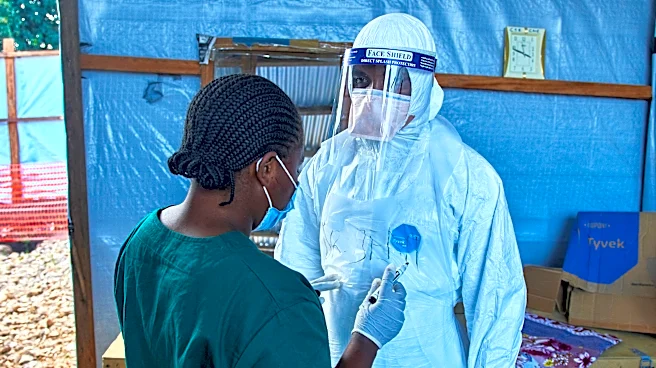
An American humanitarian worker in the Democratic Republic of the Congo (DRC) has tested positive for the Bundibugyo strain of Ebola. This development comes as the World Health Organization (WHO) warns that the outbreak may be significantly larger than
current official figures suggest. The U.S. Centers for Disease Control and Prevention (CDC) is working with Congolese authorities and international partners to trace contacts and prevent further transmission. The outbreak, concentrated in the eastern provinces of the DRC, has begun to spread across international borders, with cases reported in Uganda and one in France. The Bundibugyo strain has no approved vaccine, complicating containment efforts.
Why It's Important?
The outbreak poses a significant public health challenge, particularly in regions with weak healthcare infrastructure and ongoing conflict. The lack of a vaccine for the Bundibugyo strain means that healthcare providers must rely on supportive care, which can be less effective in resource-limited settings. The potential for the outbreak to spread further internationally raises concerns about global health security and the need for coordinated international response efforts. The situation highlights the importance of strengthening healthcare systems and improving disease surveillance and response capabilities in vulnerable regions.
What's Next?
Efforts to contain the outbreak will likely intensify, with increased international collaboration and support. The WHO and other health organizations may ramp up efforts to develop a vaccine and improve treatment protocols for the Bundibugyo strain. Monitoring and controlling the spread of the virus across borders will be critical to preventing a larger global health crisis. The CDC has stated that the risk to the United States remains low, but continued vigilance and preparedness are essential.